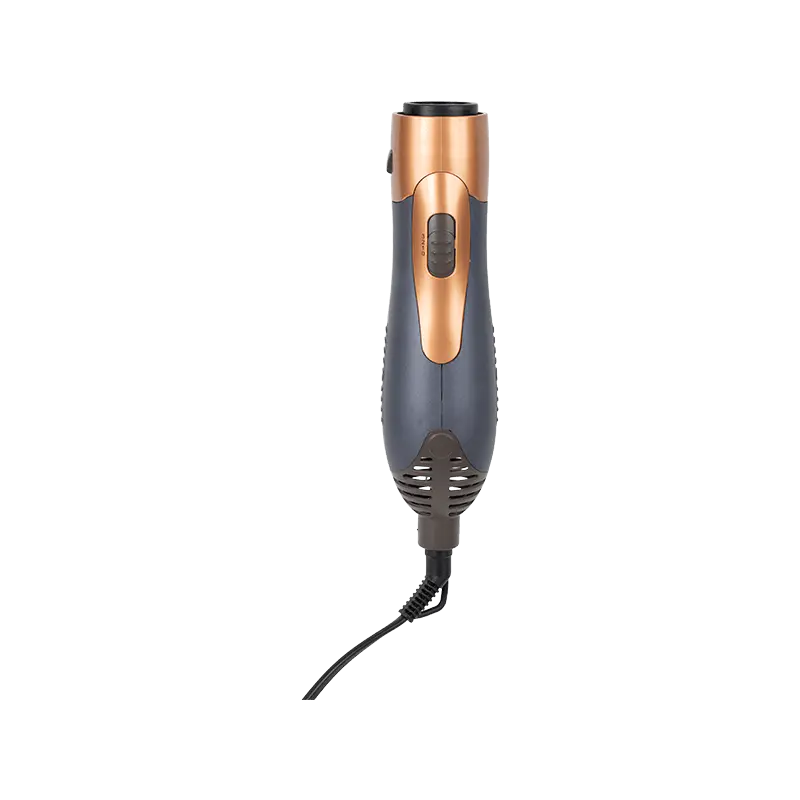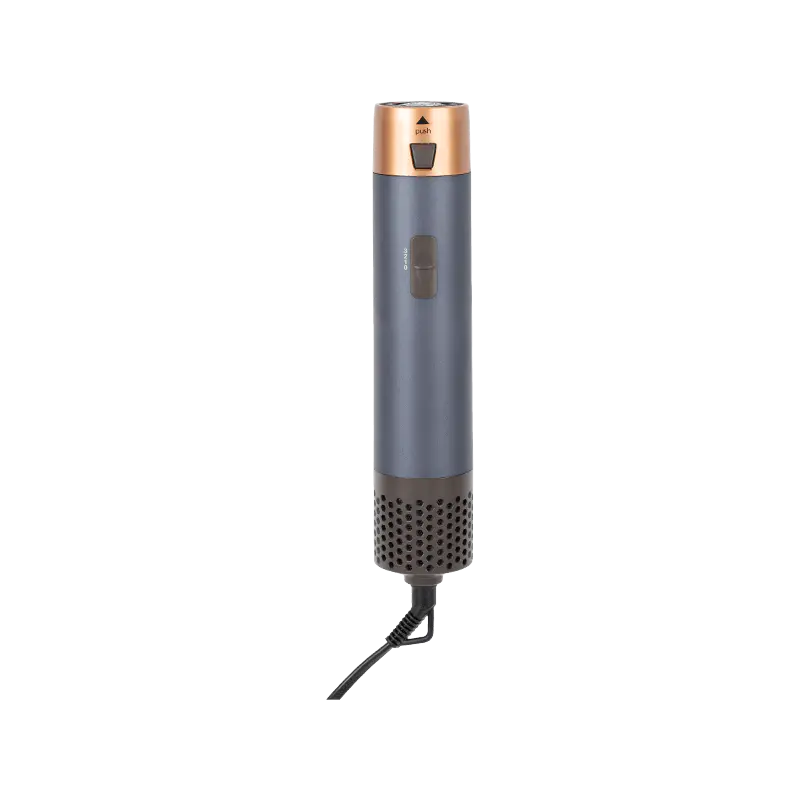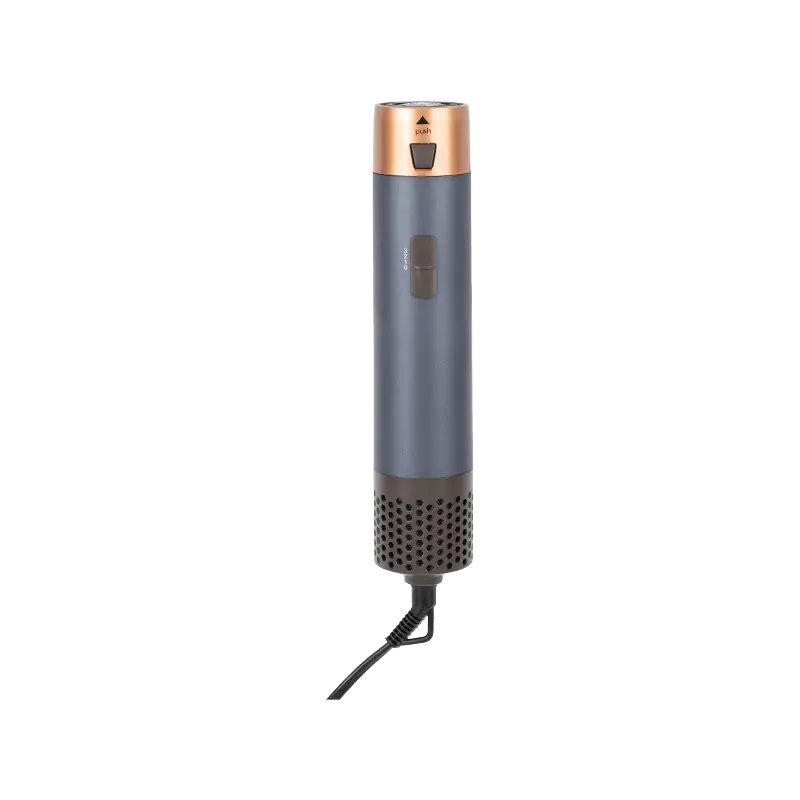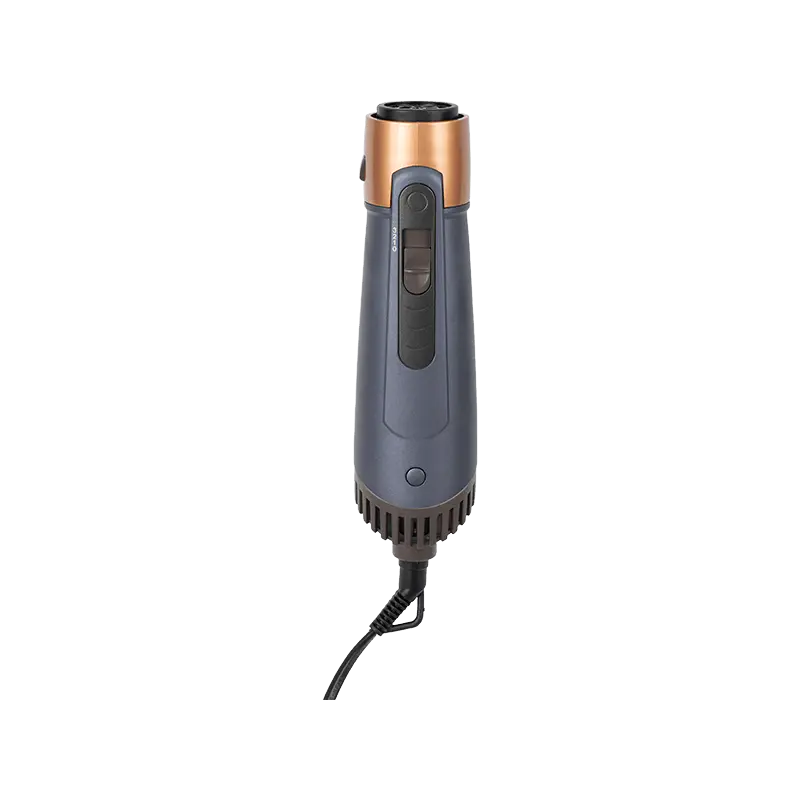
Modern consumers increasingly expect one personal-care appliance to perform the work of several traditional styling tools. A hair dryer, curling iron, straightening brush, volumizing brush, diffuser, and smoothing nozzle may each serve a specific purpose, but purchasing and storing multiple appliances can be expensive, inconvenient, and time-consuming. The JYS-800I Self-Cleaning High-Speed Hot Air Brush addresses this challenge with a comprehensive styling system that combines drying, curling, straightening, smoothing, root lifting, and finishing functions in one versatile platform.
Designed for home users, beauty professionals, private-label brands, and premium gift programs, this hot air brush is built around a high-speed motor, interchangeable accessories, adjustable temperature control, LED indicators, optional ionic technology, and an automatic self-cleaning function. Together, these features create a product positioned above basic hot air brushes that offer only one brush head and a limited number of heat settings.
The appliance is available in configurations supporting different regional electrical standards and motor requirements. Depending on the selected version, the product can use a high-speed DC motor or a BLDC motor, with power outputs ranging from approximately 800 watts to 1,400 watts. This flexibility allows importers and brand owners to specify suitable electrical performance for different markets while maintaining the central design concept of a multi-functional hot air styling system.
Its most significant advantage is not simply the number of included attachments. The product combines accessory variety with a structured control system, high-speed airflow, safety protection, durable construction, and manufacturing support from an experienced small-appliance producer. For companies seeking OEM or ODM hair-care appliances, these capabilities can be as important as the consumer-facing features.
JYS-800I Self-cleaning High-speed Brushless Hot Air Brush
1. Why Multi-Functional Hot Air Styling Matters
Hair styling routines vary substantially according to hair length, thickness, texture, moisture level, and desired finish. Fine hair may require lower heat and moderate airflow, while thick or coarse hair may need stronger airflow and longer drying time. Curly hair can benefit from a diffuser, whereas straight hair may be styled with a smoothing nozzle or straightening brush. Short hair and fringe often require smaller barrels or precision brushes.
A conventional single-purpose dryer does not provide the shaping capability required for these different routines. A curling iron can create defined curls, but it does not necessarily dry wet hair efficiently. A straightener can smooth finished hair, but it is not designed for initial drying. A round brush may add volume, but it normally requires a separate dryer and both hands. The hot air brush concept combines heated airflow and mechanical shaping, helping users move from damp hair to a finished look with fewer tools.
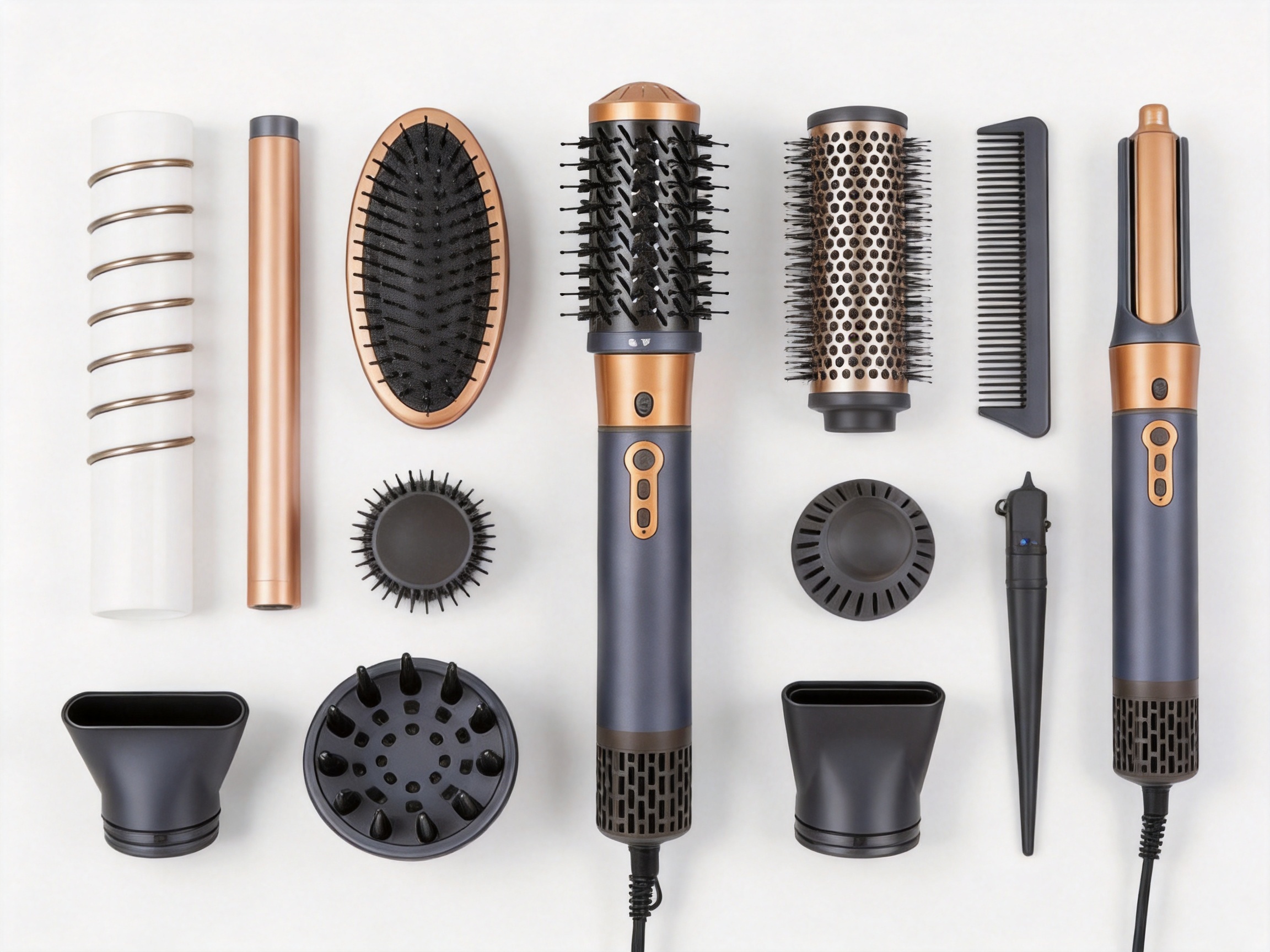
The JYS-800I extends this concept through a broad accessory selection. Rather than limiting the user to one fixed brush diameter, it offers multiple air-rotation barrels, brushes, a diffuser, a concentrator, a pre-styling dryer, a volume lifter, smoothing accessories, and a curling iron. This makes the product suitable for a wide variety of styling techniques and user preferences.
For consumers, the benefit is convenience. For salons and professional stylists, the benefit is versatility. For distributors and private-label buyers, the benefit is product differentiation. A product with multiple styling functions can occupy a stronger position in the premium personal-care category than a basic dryer or simple heated brush.
2. Product Overview
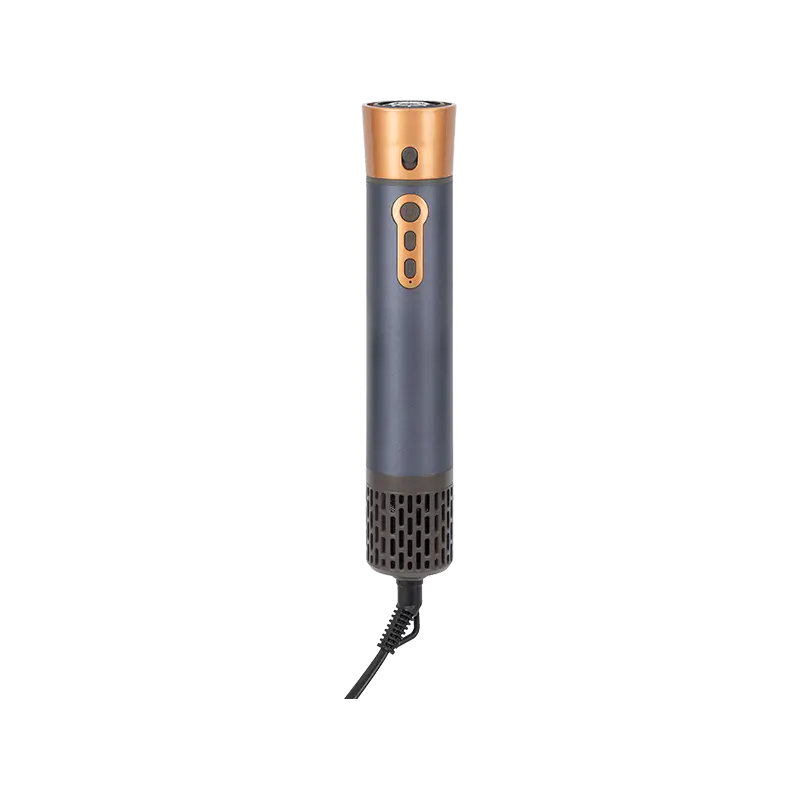
The JYS-800I is a high-speed hot air brush platform developed for drying and styling simultaneously. Its operating system combines airflow, controlled heat, interchangeable accessories, and ergonomic movement through a 360-degree swivel power cord. The product can be specified with an ionic function, allowing brand owners to offer an upgraded version intended to reduce static and improve the visual smoothness of the hair.
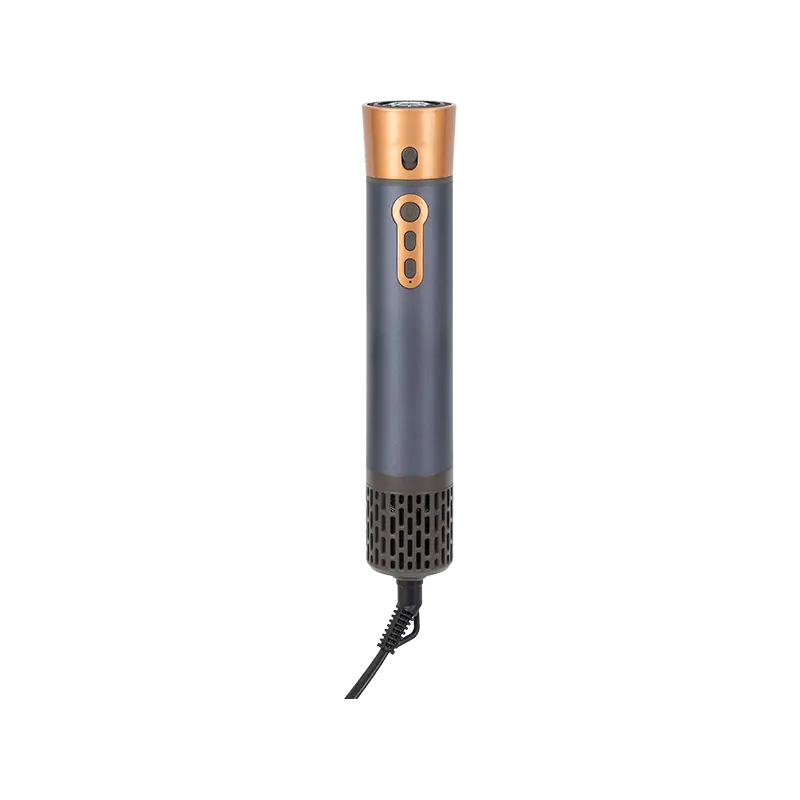
The control interface uses three buttons with LED indicators. These controls are designed to communicate the appliance’s operating status, wind-speed selection, and temperature setting. A clear interface is especially important for a multi-function appliance because users may change accessories and styling techniques frequently. Visual feedback helps reduce uncertainty and gives the product a more advanced appearance than appliances controlled only by a basic mechanical slider.
According to the supplied specifications, the DC motor configuration supports multiple wind speeds and up to ten temperature modes, including cool air. The product information also identifies versions using different power ranges and a BLDC motor option. This means the final technical configuration can be adapted according to market requirements, electrical systems, performance targets, and commercial positioning.
| Product Type | Multi-functional hot air brush and hair styling system |
| Model | JYS-800I |
| Motor Options | High-speed DC motor or BLDC motor configuration |
| Power Options | Approximately 800W–1000W or 1200W–1400W, depending on configuration |
| Voltage Options | 120V, 220V–240V, with applicable frequency requirements |
| Wind Settings | Up to three wind-speed levels on the specified DC configuration |
| Temperature Settings | Up to ten temperature modes, including cool air |
| Control System | Three-button LED control interface |
| Accessories | Twenty interchangeable styling pieces |
| Self-Cleaning | Automatic airflow-reversal cleaning function |
| Safety System | Temperature control, fuse protection, and stainless-steel inner net |
| Power Cord | 360-degree swivel design |
| Ionic Function | Available as an optional feature |
Because electrical and motor specifications may vary by order, buyers should confirm the exact configuration before production. This is particularly important when products are intended for several countries, as voltage, frequency, plug type, power consumption, certification, and labeling requirements can differ.
3. Twenty Accessories for Different Styling Needs
The included accessory system is one of the strongest competitive advantages of the product. Many entry-level hot air brushes provide one fixed brush head or two interchangeable attachments. The JYS-800I is designed as a more complete styling platform, offering twenty pieces for drying, curling, smoothing, straightening, root lifting, and finishing.
Air-Rotation Curling Barrels
The standard left and right air-rotation barrels are approximately 30 millimeters in diameter. They use airflow to help wrap hair around the barrel, reducing the need for users to manually wind each section. Separate left- and right-rotation attachments help users create balanced styling on both sides of the head. The anti-heating tips are designed to improve handling and reduce contact with hot surfaces during use.
The longer air-rotation barrels, measuring approximately 18.5 centimeters, are intended for longer hair or larger sections. Their extended working length can help users style more hair in one pass and may be particularly useful for people with long or thick hair. The longer barrels are also available in left- and right-rotation versions.
A two-in-one left-and-right air-rotation attachment offers additional flexibility by allowing the direction to be changed. This can reduce the number of attachments that need to be stored while providing a practical option for users who want to switch curl direction during a styling routine.
Drying and Airflow Attachments
The pre-styling dryer is designed to remove excess moisture before shaping. Pre-drying is an important part of a controlled styling process because hair that is too wet may require prolonged exposure to heat, while hair that is already partially dry is generally easier to shape.
The concentrator directs airflow into a narrower stream. This can be useful for controlled drying, smoothing with a brush, or concentrating airflow on a specific section. The diffuser distributes airflow more gently across a broader area and is intended for drying textured or curly hair while helping preserve its natural pattern.
The anti-flyaway nozzle is designed to smooth unruly surface hair and improve the neatness of the finished style. It can be used as a finishing attachment after drying or shaping. The volume lifter directs attention to the roots, helping users create lift and a fuller appearance.
Brush Attachments
The oval brush is intended for creating shape and soft volume. Its form can support a rounded finish and is suitable for users who want movement without tightly defined curls.
The half brush is designed for straightening and shaping the ends inward. This type of attachment can be helpful for users who want a smoother appearance while retaining a natural curve at the tips.
The large straightening brush is intended to combine heated airflow with brush tension. Compared with a traditional flat iron, a straightening brush can offer a more natural, voluminous result for some hair types. It may also be useful for quickly controlling large sections of hair.
The roll brush is suited to firm or coarse hair and can be used for curls, shaping, or fringe styling. The point roll brush is designed for softer hair textures and more precise work around the fringe or smaller sections.
The small brush, with an approximate diameter of 34 millimeters, is intended for smaller curls and shorter hair. The tip small brush has a similar size and includes an anti-heating tip for improved handling.
The large brush options, approximately 54 millimeters and 50 millimeters in diameter, are intended for larger curls, loose waves, volume, and longer hair. Different diameters allow users to vary the size and softness of the finished shape.
The curling iron attachment provides a more conventional curling format for users who want a smaller and more defined curl. Its inclusion expands the product beyond hot air styling and gives the kit an additional option for finishing or specialized looks.
| Accessory Group | Primary Function | Typical Styling Use |
| 30 mm air-rotation barrels | Air-assisted curling | Defined curls and balanced left/right styling |
| 18.5 cm air-rotation barrels | Long-section air curling | Long or thick hair |
| Two-in-one rotating barrel | Selectable curl direction | Flexible left and right styling |
| Pre-styling dryer | Initial drying | Removing excess moisture |
| Diffuser | Distributed airflow | Curly or textured hair |
| Concentrator | Focused airflow | Controlled drying and smoothing |
| Anti-flyaway nozzle | Surface smoothing | Finishing and neatness |
| Volume lifter | Root elevation | Adding lift and fullness |
| Oval brush | Soft shaping | Volume and curved finishes |
| Half brush | Straightening and tip shaping | Smoothed lengths with curved ends |
| Large straightening brush | Broad-section smoothing | Efficient straightening |
| Roll and point roll brushes | Brush styling | Firm hair, fringe, and detail work |
| 34 mm brushes | Small-scale curling | Shorter hair and smaller curls |
| 50 mm and 54 mm brushes | Large-scale curling | Loose curls and long hair |
| Curling iron | Defined heat curling | Smaller and more structured curls |
4. High-Speed Motor Performance
Motor performance directly affects airflow, drying time, accessory response, and the overall user experience. The specified DC motor can operate at approximately 40,000 revolutions per minute with a stated tolerance of plus or minus 10 percent. The product information also describes high-speed airflow capable of supporting air-assisted curling.
A high-speed motor provides several potential advantages over a basic low-power motor. Stronger airflow can help remove moisture more efficiently, reduce the time needed for pre-styling, and improve the responsiveness of drying attachments. When used with air-rotation barrels, the motor helps draw and wrap hair around the barrel, supporting a more automated curling process.
The stated motor lifespan exceeds 200 hours under the specified product information. Actual service life depends on operating conditions, cleaning, ventilation, voltage stability, user habits, and production configuration. Nevertheless, a motor designed for repeated operation is important for both household use and professional environments, where the appliance may be used more frequently than a typical personal-care product.
The product information also references a BLDC motor option. Brushless direct-current motor technology can support efficient, stable operation and may be selected for a premium product version. The exact performance characteristics of the DC and BLDC configurations should be confirmed through product samples and engineering documentation before market claims are finalized.
Compared with many conventional hot air brushes, the JYS-800I is positioned around high-speed airflow rather than simple low-intensity warming. This creates a stronger connection between the motor and the product’s multi-function concept. The appliance is not merely a heated brush; it is a compact airflow styling platform.
5. Precision Temperature and Wind Control
Hair does not respond identically to heat. Excessive temperature can increase the risk of dryness or discomfort, while insufficient heat may produce an incomplete style or require repeated passes. Adjustable settings allow users to match the appliance more closely to hair condition and styling objectives.
The specified DC version provides up to three wind speeds and ten temperature modes, including cool air. This combination offers a broader control range than basic products with one or two heat levels. Lower settings can be selected for delicate, fine, or already-dry hair, while stronger airflow and higher temperatures may be selected for thicker hair or faster drying.
The cool-air function is useful for finishing. After hair has been shaped with heat, a cooler airflow can help reduce the sensation of heat and support a more comfortable final pass. It can also provide a practical option for users who prefer minimal heat during touch-ups.
Temperature control is also an important safety feature. The appliance includes temperature regulation and fuse protection, creating two layers of protection against abnormal heating conditions. The stainless-steel inner net at the rear adds another structural safety element by protecting the internal area and helping prevent unwanted contact with components.
Users should still follow responsible styling practices. Hair should not be held against a hot attachment for an excessive period, and the appliance should be kept moving during use. Product instructions should explain suitable distances, attachment handling, cleaning procedures, and cooling requirements.
6. Intelligent LED Control Interface
The three-button LED control interface gives the product a more modern and organized operating experience. Rather than relying on a single switch, the system separates power, wind, and temperature control. LED indicators provide visual confirmation of the selected operating mode.
For consumers, this can make the product easier to understand, particularly when several temperature modes are available. For retailers, an LED interface provides a visible point of differentiation in product photography, packaging, and demonstrations. A clear control panel also contributes to the perception of precision and technology.
The interface is particularly valuable for a product with twenty attachments. Because each attachment can be used for a different purpose, users need to adjust the appliance according to the selected styling method. For example, a diffuser may require a different airflow approach than a concentrator, while an air-rotation barrel may require a different temperature than a pre-styling dryer.
From an OEM and ODM perspective, the interface may offer opportunities for visual customization. Depending on the approved engineering design, buyers may be able to specify colors, markings, indicator styles, packaging language, or other exterior details. Such changes should be evaluated through engineering review to ensure that they do not affect reliability, certification, or user clarity.
7. Automatic Self-Cleaning Function
Hair tools operate in an environment where dust, loose hair, styling-product residue, and airborne particles may accumulate. If the air intake or internal filter area becomes obstructed, airflow can decline and the motor may need to work harder. Regular cleaning is therefore important for maintaining performance.
The JYS-800I includes an automatic self-cleaning function based on airflow reversal. According to the supplied product information, the function reverses airflow to help remove dust and debris from the internal filter area. This reduces the amount of manual maintenance required and supports more consistent operation over time.
Self-cleaning is a meaningful competitive feature because many basic hot air brushes rely entirely on users to remove debris manually. Manual cleaning remains necessary in most practical situations, but the automatic process can help dislodge particles that are difficult to reach. It also creates a stronger connection between the product and the expectations of technology-oriented consumers.
The self-cleaning function should be presented as a maintenance aid rather than a substitute for all cleaning. Users should still follow the instruction manual, inspect the air inlet, remove visible hair, and ensure that the appliance is unplugged before performing manual maintenance. The exact operating sequence and cleaning duration should be confirmed in the final user documentation.
For professional environments, easier maintenance can contribute to workflow efficiency. A salon may use the appliance repeatedly throughout the day, making the condition of the intake area especially important. A convenient cleaning routine can support product availability and reduce avoidable interruptions.
8. Optional Ionic Technology
The appliance can be equipped with an optional ionic function. Ionic technology is commonly used in hair-care appliances to help reduce static electricity and improve the visual smoothness of the hair. Negative ions may help break down water droplets during drying and reduce the electrical charge that contributes to flyaways.
The ionic option enables different commercial configurations. A basic version can focus on multi-function styling, speed, and accessory value, while a premium version can add ionic performance as an upgrade. This gives brand owners flexibility when developing several models within one product family.
Ionic performance depends on the design of the ion generator, airflow, hair condition, environment, and operating method. Marketing statements should therefore be supported by the final product’s technical testing and should avoid promising results that cannot be consistently demonstrated. The most appropriate consumer-facing language generally focuses on helping reduce static and support a smoother-looking finish.
When combined with the anti-flyaway nozzle, optional ionic technology can strengthen the product’s appeal to users who prioritize sleek, polished styles. It can also help distinguish the product from standard hot air brushes that do not include any ionic feature.
9. Safety and Construction Features
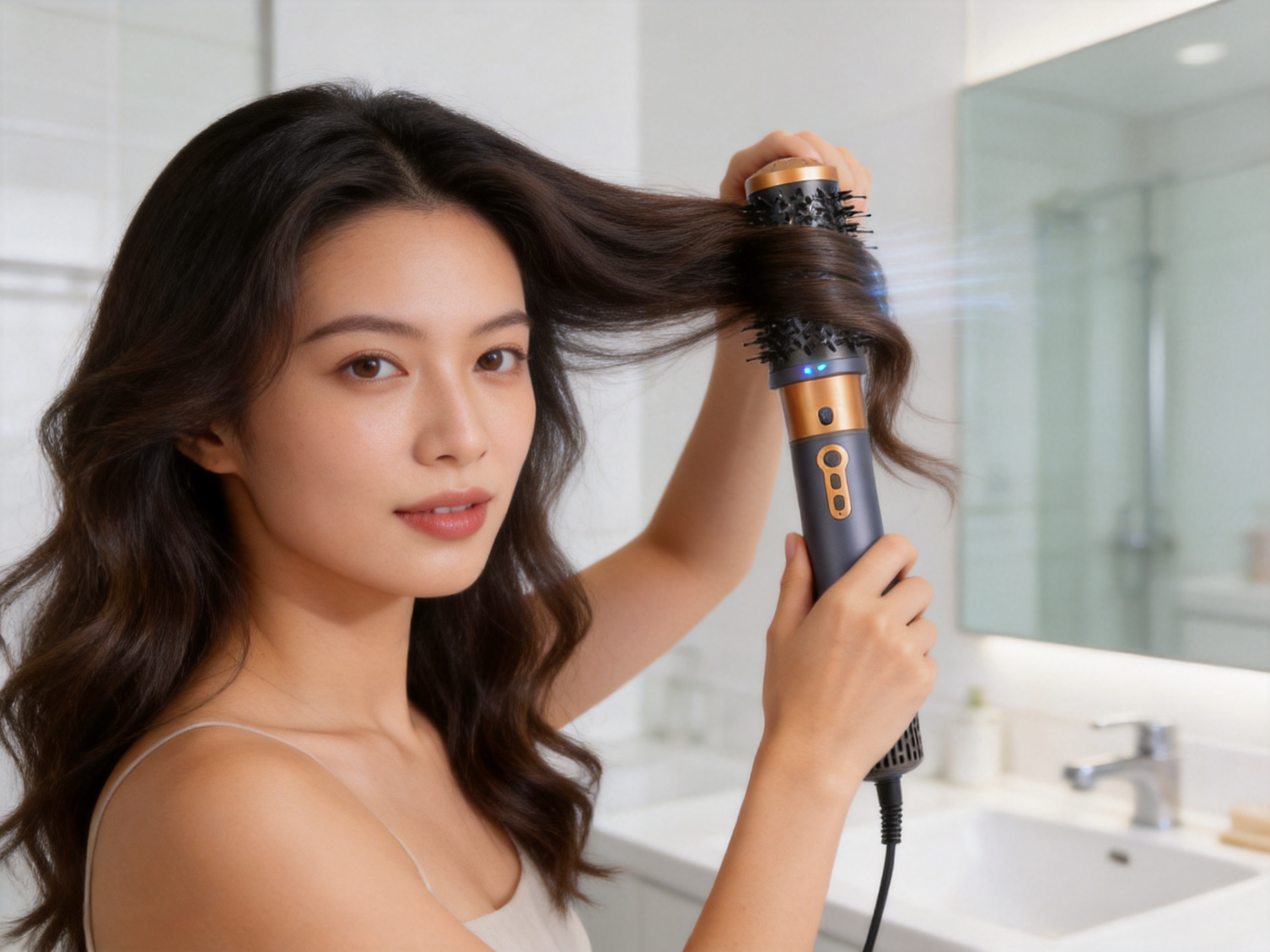
Hair appliances operate near the face, scalp, hands, and sensitive hair fibers, so safety engineering is essential. The JYS-800I includes temperature control and fuse protection as part of its double safety system. These components are designed to help manage abnormal temperature conditions and electrical risks.
The stainless-steel inner net at the rear provides a protective barrier around the internal airflow area. The double-cover net structure helps prevent larger particles from entering the motor section and supports a more secure construction. Proper airflow management is important because the motor depends on unobstructed ventilation for stable performance.
Anti-heating tips are included on selected curling attachments. These tips can make the accessories easier to hold and position during styling. However, users should still avoid touching heated surfaces and should allow attachments to cool before changing or storing them.
The 360-degree swivel cord supports movement during use and helps reduce twisting at the handle. This is especially useful when creating curls or working around the back of the head. A swivel design can also reduce strain on the cord connection compared with a fixed cable that repeatedly bends in one direction.
For international distribution, safety is supported not only by product design but also by appropriate certification, testing, labeling, and production control. The manufacturer reports experience with international certifications and compliance programs, including TUV GS, CE, CB, ERP, REACH, PAHS, ROHS, and SCCP. Specific approvals depend on the final model, destination market, electrical version, and applicable regulations, so buyers should verify the documentation for each order.
10. Advantages Over Basic Competitor Products
The hot air brush market contains a wide range of products, from simple single-head appliances to premium multi-function systems. The JYS-800I competes most directly in the advanced and versatile segment. Its advantages can be summarized across functionality, control, maintenance, performance, and customization.
More Functions in One Platform
A basic competitor may provide one round brush and one airflow setting. The JYS-800I offers twenty interchangeable accessories covering drying, curling, straightening, smoothing, root lifting, and finishing. This broad range can reduce the need for additional tools and creates a more complete consumer proposition.
More Detailed Temperature Adjustment
Many entry-level products provide only a small number of temperature settings. Up to ten temperature modes give the user more control and allow the appliance to serve a wider range of hair types and styling routines. The inclusion of cool air further improves flexibility.
High-Speed Air-Assisted Curling
Air-rotation barrels make the curling process more automated than a conventional fixed brush. The high-speed motor supports airflow-based wrapping, while left and right attachments help users create a balanced look. Longer barrels extend the usefulness of the system for long hair.
Self-Cleaning Maintenance Support
Automatic airflow reversal is a feature not commonly found on basic styling brushes. It gives the product a technology advantage and may help preserve airflow performance when combined with normal manual cleaning.
Professional and Premium Positioning
The combination of LED controls, optional ionic technology, twenty accessories, high-speed motor performance, safety features, and self-cleaning creates a stronger premium story. Retailers can present the product as a complete styling kit rather than an ordinary heated brush.
OEM and ODM Flexibility
Because the manufacturer specializes in small electrical appliances and supports OEM and ODM projects, brand owners can explore market-specific versions. Potential areas may include voltage selection, plug configuration, accessory combinations, exterior styling, packaging, instruction manuals, and feature prioritization, subject to engineering and certification review.
| Comparison Area | Basic Hot Air Brush | JYS-800I Positioning |
| Accessory Range | Usually one or two heads | Twenty interchangeable styling pieces |
| Styling Functions | Primarily drying or basic curling | Drying, curling, smoothing, straightening, volume, and finishing |
| Temperature Control | Limited heat levels | Up to ten modes plus cool air on the specified configuration |
| Motor Concept | Standard low- or medium-speed motor | High-speed DC or BLDC configuration |
| Cleaning | Manual cleaning only | Airflow-reversal self-cleaning support plus manual maintenance |
| Interface | Basic switch or slider | Three-button LED control interface |
| Ionic Feature | Often unavailable | Optional ionic configuration |
| Professional Use | Limited versatility | Multiple attachments and adjustable operation |
| Customization | May be limited | OEM and ODM development support |
11. Applications for Different User Groups
Tech-Oriented Home Users
Consumers who enjoy smart, multifunctional products may be attracted to the LED control panel and self-cleaning system. The product offers a more sophisticated experience than a traditional dryer while remaining practical for home use.
Users with Long or Thick Hair
The high-speed motor, longer air-rotation barrels, and large brush attachments are especially relevant to users who need to manage larger sections of hair. Stronger airflow and broader styling surfaces may help reduce the time required for drying and shaping.
Users with Curly or Textured Hair
The diffuser provides a dedicated option for distributed drying. Users may also combine the diffuser with lower heat or cool air according to their preferred styling routine. The range of brush and curling attachments allows the product to serve both natural texture care and reshaping needs.
Beauty Salons and Stylists
Salons can benefit from the product’s broad attachment range and adjustable operating modes. One appliance can support several styling services, including blow-drying, smoothing, root lifting, curling, fringe styling, and finishing. Professional users should evaluate ergonomic comfort, cleaning procedures, duty cycle, and attachment durability through sample testing.
Premium Gift Programs
A complete twenty-piece styling kit has strong gift appeal. The product can be positioned for holidays, beauty promotions, wedding preparation, travel-related campaigns, or premium loyalty programs. Attractive packaging and clear accessory organization can strengthen the unboxing experience.
12. Manufacturing Strength and Engineering Capability
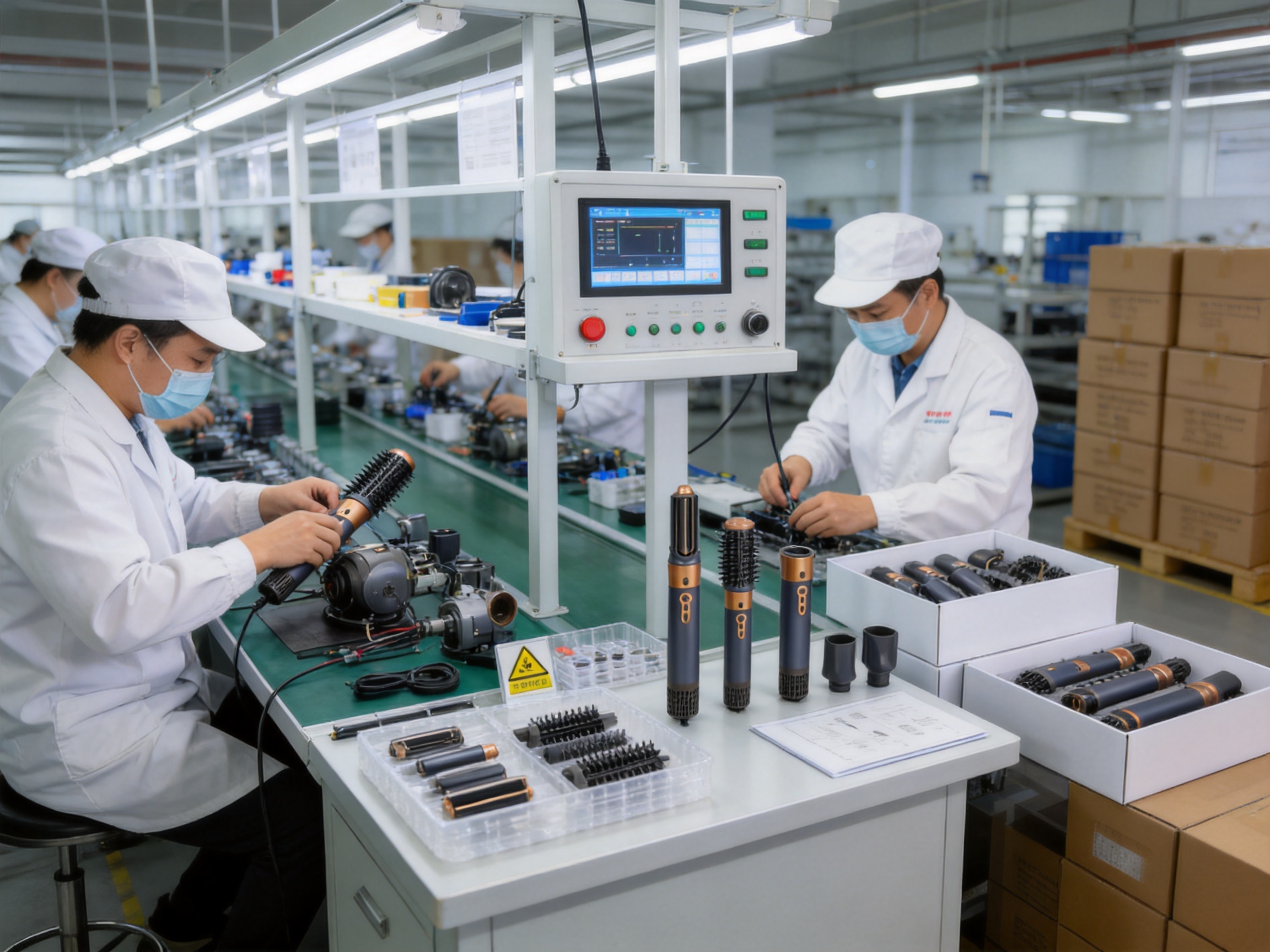
The company behind the product operates as a professional manufacturer of small electrical appliances with experience in product development, manufacturing, OEM services, and ODM projects. The business began in 2009 and has developed a product focus covering professional hair-care appliances and smart products for healthy living.
The company operates a new factory in Shaoxing, Zhejiang Province, while also maintaining the history and experience associated with its earlier factory operation. Its location in an established manufacturing region provides access to an extensive supplier network, transportation infrastructure, technical labor, and supporting industrial services.
The reported production organization includes more than 140 professional employees and four production lines. Monthly output is approximately 300,000 sets, with annual shipments exceeding three million units. This scale can be important for importers and international brands that require stable capacity, repeatable quality, and reliable replenishment after a successful product launch.
Production capacity alone does not guarantee quality, but it provides a foundation for organized manufacturing. High-volume experience can support standardized assembly procedures, material planning, production scheduling, testing routines, and quality records. These capabilities are particularly relevant for electrical appliances containing heating elements, motors, control components, wiring, safety devices, and multiple molded accessories.
The company reports exports to more than thirty countries and regions and long-term cooperation with recognized international customers. This experience indicates familiarity with export documentation, buyer communication, market requirements, packaging coordination, and production expectations. The company also reports successful BSCI and BEPI audits, demonstrating attention to social responsibility and environmental management requirements.
13. Advanced Production Process for a Multi-Function Hair Tool
A product such as the JYS-800I requires more than simple final assembly. Its manufacturing process must coordinate motor performance, heating control, airflow design, accessory fit, electrical safety, cosmetic appearance, and packaging accuracy.
Product Development and Engineering Review
The process begins with product planning and engineering review. Technical teams evaluate the motor, heating system, airflow structure, handle design, control interface, accessory connection system, cord assembly, and protective components. For OEM and ODM projects, the engineering stage also considers brand requirements, target price, destination market, packaging, and certification needs.
Tooling and Component Preparation
Interchangeable accessories require carefully controlled tooling and dimensional consistency. Each attachment must connect securely to the main body while remaining practical for removal and replacement. Brush diameters, barrel lengths, anti-heating tips, nozzle openings, and diffuser structures must be produced according to approved specifications.
Plastic parts may require inspection for color consistency, surface finish, deformation, flash, and assembly fit. Metal components such as heating elements, inner nets, barrels, and conductive parts require appropriate material control and dimensional checking.
Motor and Heating Assembly
The motor assembly must be installed with suitable alignment, electrical connection, vibration control, and airflow clearance. The heating system requires secure wiring, insulation, temperature regulation, and appropriate spacing from surrounding materials. These operations should be controlled through work instructions and inspection points.
Control Panel Integration
The three-button LED interface requires correct connection between the physical controls, indicator lights, control circuitry, and main power system. Functional testing should confirm that wind-speed changes, temperature adjustments, cool-air operation, and LED feedback correspond correctly to the selected settings.
Safety Testing
Safety testing may include electrical withstand testing, insulation checks, grounding or leakage-current evaluation where applicable, temperature monitoring, fuse verification, abnormal-operation testing, cord flexing, attachment fit, and continuous operation testing. The final testing program should reflect the requirements of the destination market and approved certification standards.
Final Assembly and Packaging
After assembly and testing, the main unit and twenty accessories must be matched accurately. Packaging must protect the attachments from damage and present them in an organized way. Manuals, labels, warranty documents, plug types, cartons, and shipping marks should be checked before goods are released.
14. Quality Control Priorities
For an appliance with many functions, quality control should cover both the main body and every accessory. A product may operate correctly as a dryer but still fail to meet expectations if an attachment is loose, difficult to install, poorly finished, or incorrectly packed.
Incoming material inspection should verify motors, heating components, wires, switches, plastic parts, metal components, packaging materials, and accessory elements. In-process inspection should check assembly position, soldering or terminal connections, insulation, screw torque, airflow passages, button operation, and component fit.
Finished-product inspection should include appearance, dimensions, power consumption, wind output, temperature behavior, LED function, self-cleaning operation, cord rotation, attachment connection, and safety performance. Sampling levels and acceptance criteria should be agreed upon for each order.
For OEM customers, quality expectations should be documented before mass production. Approved samples, golden samples, color references, packaging layouts, accessory lists, and technical specifications can help prevent misunderstandings. Any design change should be reviewed through a controlled process.
15. OEM and ODM Opportunities
The product offers a strong foundation for private-label and customized development. OEM customers may use the existing structure with their own brand identity, packaging, manuals, color scheme, and market positioning. ODM customers may work with the manufacturer to develop a tailored version based on a specific feature set or commercial objective.
Possible customization areas include motor selection, voltage and frequency, plug type, power range, ionic function, accessory combination, control markings, exterior colors, surface finish, packaging structure, language, and included documentation. Buyers may also choose whether to emphasize salon performance, home convenience, premium gifting, or technology-oriented styling.
Customization should be balanced against minimum order quantities, tooling costs, certification requirements, lead times, and product reliability. Adding accessories can increase packaging size and logistics costs, while reducing accessories can make the product more affordable and easier to position in a specific retail channel.
A structured development process normally includes an initial product brief, technical review, quotation, sample preparation, testing, design approval, packaging confirmation, pilot production, and mass production. Clear communication at each stage helps reduce delays and ensures that the final product matches the buyer’s commercial expectations.
16. Sustainability and Responsible Manufacturing
Energy efficiency and responsible manufacturing are increasingly important in the personal-care appliance sector. The company reports certifications and compliance experience related to energy efficiency, restricted substances, chemical safety, and environmental requirements. These areas may include ERP, REACH, ROHS, PAHS, and SCCP considerations, depending on the destination market and product configuration.
The self-cleaning function may help extend the practical service life of the appliance by supporting airflow maintenance. A durable motor, replaceable or maintainable attachments, and stable construction can also reduce the frequency of replacement. However, sustainability claims should be supported by objective documentation and should accurately reflect the final product.
Packaging design can contribute to responsible distribution by organizing the twenty accessories efficiently, reducing unnecessary material, and protecting the product during transport. Packaging materials, printing inks, internal supports, and carton dimensions should be selected according to the buyer’s market and environmental goals.
17. Recommended Consumer Use
Users should begin by selecting the appropriate attachment and ensuring that it is securely connected. Hair should generally be towel-dried or partially dried before using curling or shaping accessories unless the attachment is specifically being used for initial drying.
The user can start with a lower temperature and moderate airflow, then increase the setting if additional drying or shaping power is needed. Smaller sections may produce more defined results, while larger sections can create a softer and faster finish. The selected attachment should match the desired result and the length or texture of the hair.
When using air-rotation barrels, the user should guide a manageable section toward the barrel and allow the airflow to assist with wrapping. The anti-heating tip should be used for handling, while direct contact with heated surfaces should be avoided. The appliance should not remain stationary against the hair for an extended period.
After styling, the cool-air setting may be used for a finishing pass. The appliance should then be switched off, unplugged when appropriate, and allowed to cool before the attachments are removed or stored.
Visible hair and debris should be removed from the intake area. The self-cleaning function should be used according to the final instruction manual, and manual cleaning should only be performed when the appliance is disconnected from power.
18. Q&A
Q1: What is the main purpose of this hot air brush?
The product is designed to dry and style hair with one multi-functional appliance. It can support curling, straightening, smoothing, root lifting, volume creation, diffused drying, focused drying, and finishing, depending on the selected attachment.
Q2: How many accessories are included?
The product system includes twenty interchangeable accessories. These include air-rotation barrels, longer curling barrels, a two-in-one rotating attachment, a diffuser, pre-styling dryer, concentrator, anti-flyaway nozzle, volume lifter, several brushes, and a curling iron.
Q3: Does it support air-assisted curling?
Yes. The air-rotation attachments use airflow from the high-speed motor to help wrap hair around the barrel. Left- and right-rotation options are available for balanced styling, and a two-in-one attachment can provide directional flexibility.
Q4: How many temperature modes are available?
The specified DC configuration offers up to ten temperature modes, including cool air. The exact control arrangement should be confirmed for the final production version and destination market.
Q5: How many wind speeds does it have?
The specified DC version provides three wind-speed levels. Other motor or configuration options may have different control specifications, so buyers should verify the final technical details before ordering.
Q6: What does the self-cleaning function do?
The self-cleaning function reverses airflow to help remove dust and debris from the internal filter area. It is intended to reduce maintenance effort and support stable airflow. Users should still follow the manual and perform regular visual cleaning.
Q7: Is ionic technology included?
Ionic technology is available as an optional feature. It is intended to help reduce static and support a smoother-looking finish. The final ionic performance and related claims should be verified through product testing.
Q8: Is the product suitable for curly hair?
Yes. The diffuser is designed for distributed airflow and can be used for curly or textured hair. The product also includes other attachments for smoothing, reshaping, and controlled styling.
Q9: Is it suitable for long hair?
The longer air-rotation barrels and larger brush attachments are intended to support long or thick hair. Users should still select manageable sections and choose the appropriate temperature and airflow setting.
Q10: What safety features does it have?
The product includes temperature control and fuse protection, as well as a stainless-steel inner net and double-cover net structure. Selected attachments include anti-heating tips, and the cord uses a 360-degree swivel design.
Q11: What motor options are available?
The product information identifies a high-speed DC motor configuration and also references a BLDC motor option. The exact motor, power rating, speed, and control features should be confirmed according to the selected model specification.
Q12: Can the product be customized?
Yes. The manufacturer supports OEM and ODM projects. Potential customization areas include electrical configuration, motor selection, accessories, ionic function, appearance, colors, packaging, manuals, and market-specific labeling, subject to technical and certification review.
Q13: What kind of company manufactures the product?
The manufacturer is an experienced producer of small electrical appliances specializing in hair-care appliances and smart products for healthy living. It supports product development, OEM, ODM, international certification, and export manufacturing.
Q14: Is the product suitable for salons?
The broad attachment range, adjustable controls, high-speed airflow, and maintenance features make it suitable for salon evaluation. Professional buyers should test ergonomics, operating frequency, cleaning routines, and accessory durability before adopting it for intensive use.
Q15: What should importers confirm before placing an order?
Importers should confirm voltage, frequency, plug type, power rating, motor configuration, accessory list, ionic option, certifications, packaging, minimum order quantity, production lead time, warranty terms, and destination-market labeling requirements.
19. Conclusion
The JYS-800I Self-Cleaning High-Speed Hot Air Brush represents a comprehensive approach to modern hair styling. Its value comes from the combination of high-speed airflow, air-assisted curling, twenty interchangeable attachments, precise temperature control, LED operation, automatic self-cleaning, safety protection, optional ionic technology, and adaptable electrical configurations.
Compared with basic hot air brushes, it offers a broader range of styling functions and a stronger technology proposition. Users can dry, curl, straighten, smooth, lift, and finish hair without relying on a large collection of separate appliances. The range of attachments also allows the product to address different hair lengths, textures, and styling preferences.
For distributors and brand owners, the product offers more than a finished appliance. It provides a platform for OEM and ODM development supported by an experienced manufacturer, established production capacity, international compliance experience, and a professional manufacturing team. The company’s production lines, export background, audit experience, and focus on hair-care appliances create a practical foundation for international cooperation.
As demand grows for convenient, versatile, and technology-oriented personal-care products, a well-engineered multi-functional hot air brush can occupy a valuable position between ordinary dryers and expensive collections of separate styling tools. With appropriate market customization, quality control, packaging, and consumer education, this product can serve home users, professional salons, premium gift programs, and private-label retailers worldwide.
References
1. Product specification and technical information supplied for the JYS-800I Self-Cleaning High-Speed Hot Air Brush.
2. Manufacturer-provided product features, application scenarios, and frequently asked questions for the JYS-800I platform.
3. Manufacturer-provided company profile, production capacity, export experience, certification information, and OEM/ODM service description.
4. General principles of electrical appliance safety, thermal protection, motor operation, and hair-care appliance design.
5. General guidance on responsible use, cleaning, maintenance, and temperature management for heated hair-styling appliances.


 English
 Español