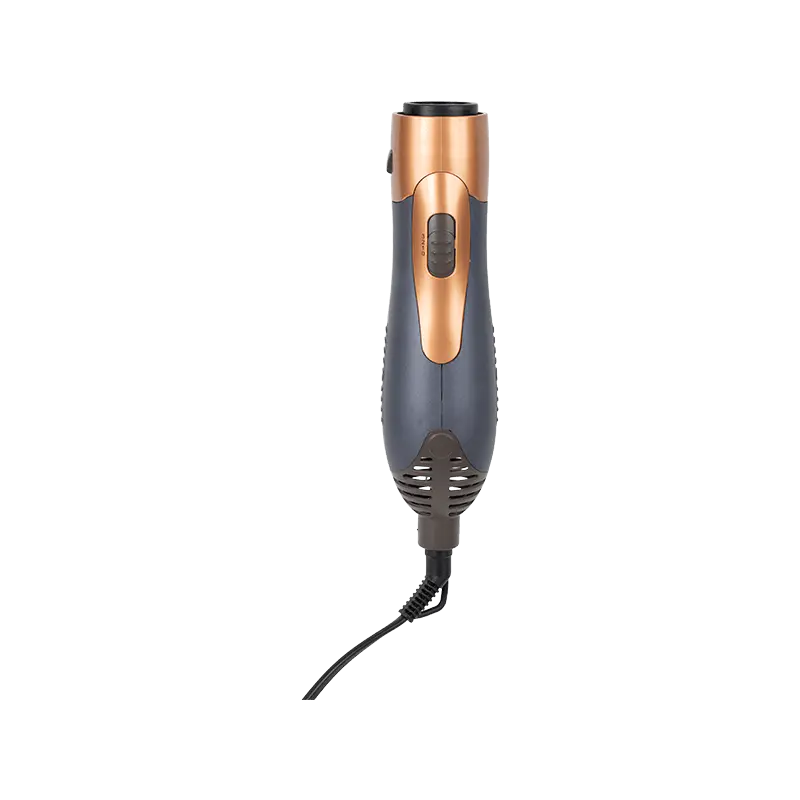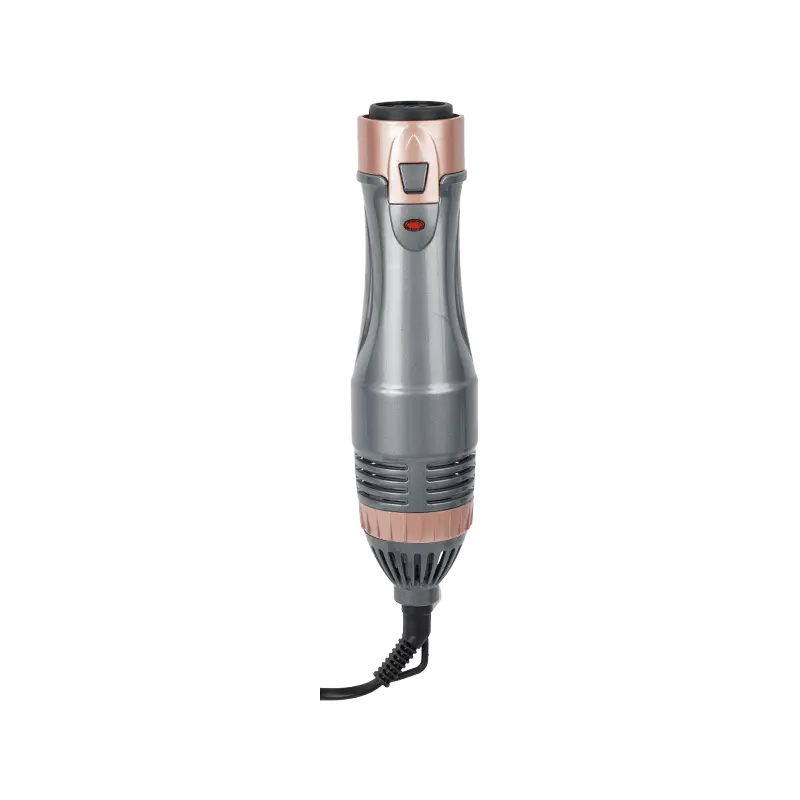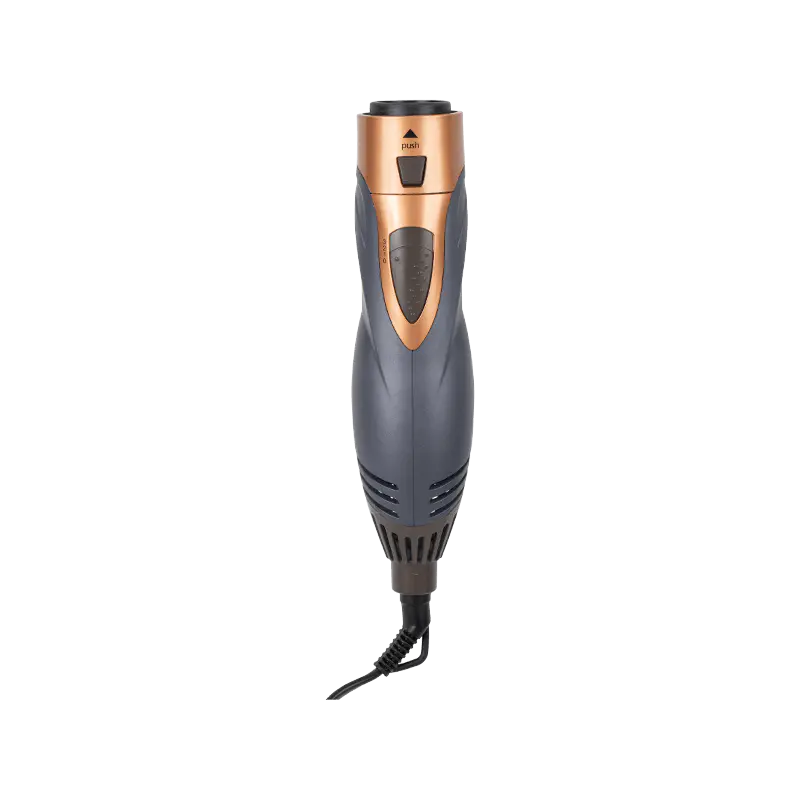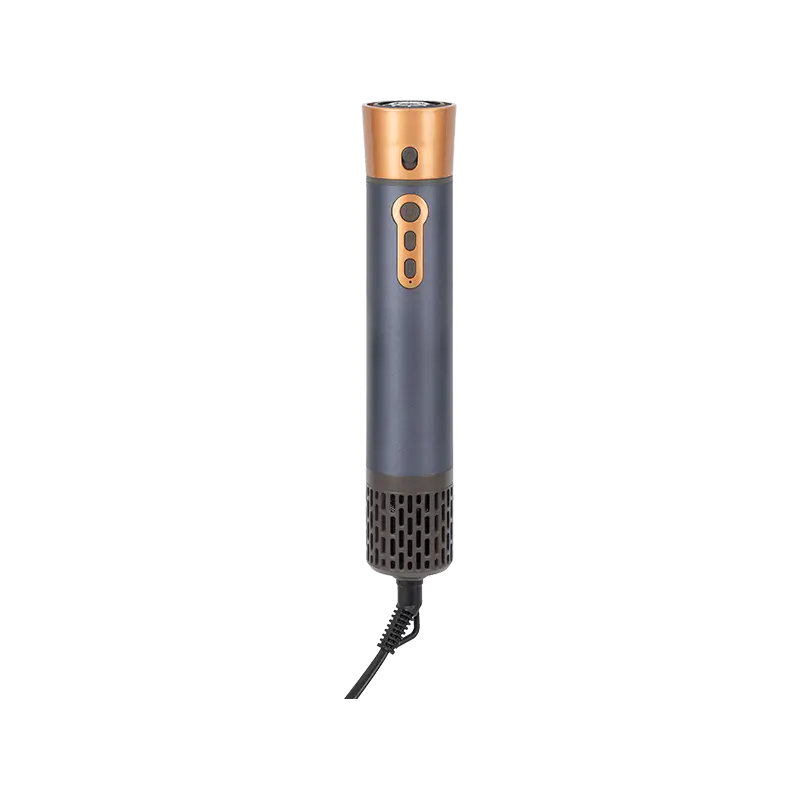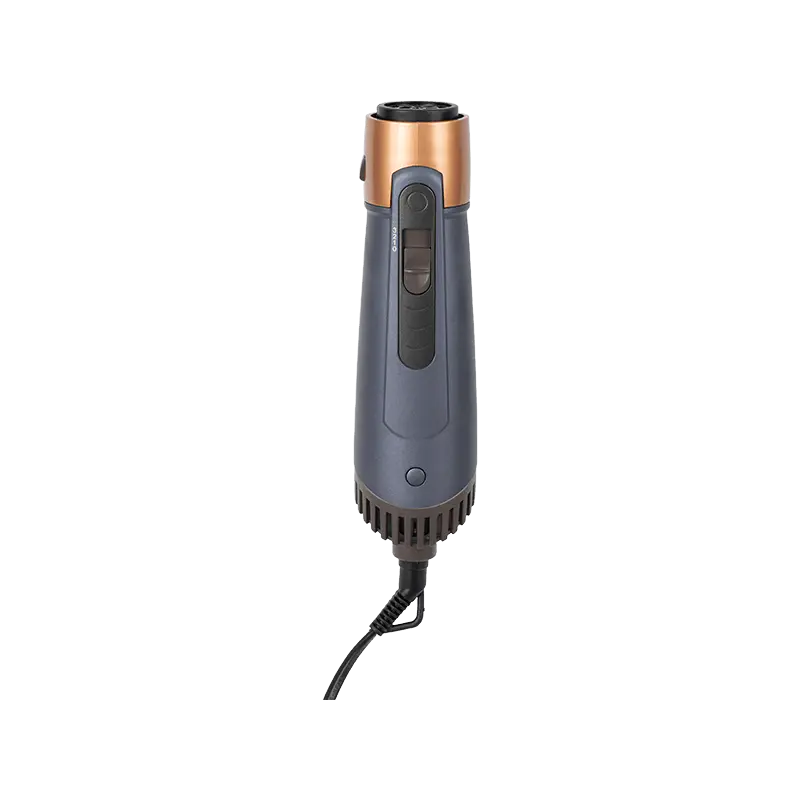
Modern consumers increasingly expect personal care appliances to do more than one job. A hair tool must be convenient enough for everyday use, flexible enough for different hair types, safe enough for repeated operation, and compact enough to fit naturally into a home or travel routine. At the same time, professional users and private-label buyers look for reliable construction, stable performance, adaptable specifications, and a manufacturing partner capable of supporting large-volume production. The JYS-1000D 1000W Independent Control Hot Air Brush addresses these expectations through a modular design that combines drying, brushing, smoothing, and styling in one versatile appliance.
Unlike a basic hot air brush with a single combined control, this model separates airflow and temperature adjustment. Users can select the desired wind speed independently from the heat setting, making it easier to customize the styling experience. The appliance includes two detachable and interchangeable brushes, while the main host can also be used independently as a hair dryer. This combination gives the product a practical advantage over many conventional one-piece styling tools that are limited to a single attachment or a fixed relationship between heat and airflow.
The product is manufactured by SHAOXING BANGSHUO ELECTRICAL APPLIANCE CO., LTD., a Chinese small-appliance manufacturer with roots reaching back to 2009 through YUYAO JOYS ELECTRICAL APPLIANCE CO., LTD. The company specializes in hair dryers, curlers, straighteners, ionic brushes, hot air brushes, and other personal care appliances, as well as selected smart products for healthy living. Its experience in product development, OEM production, ODM cooperation, certification support, and international shipment gives buyers a foundation for launching or expanding a hair-care appliance range.
This article examines the design advantages of the JYS-1000D, its user benefits, its application in retail and professional environments, and the manufacturing capabilities behind it. It also explains why independent controls, modular attachments, safety protection, and flexible customization matter when a buyer is comparing hot air brush suppliers.
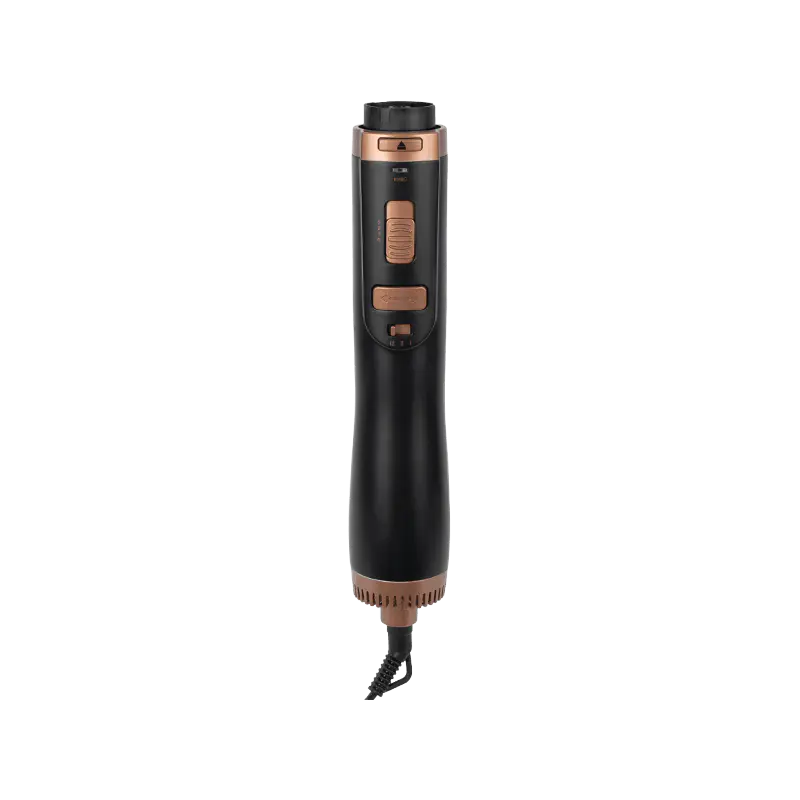
JYS-1000D 1000W Independent Control Hot Air Brush
Product Concept: One Appliance, Several Styling Functions
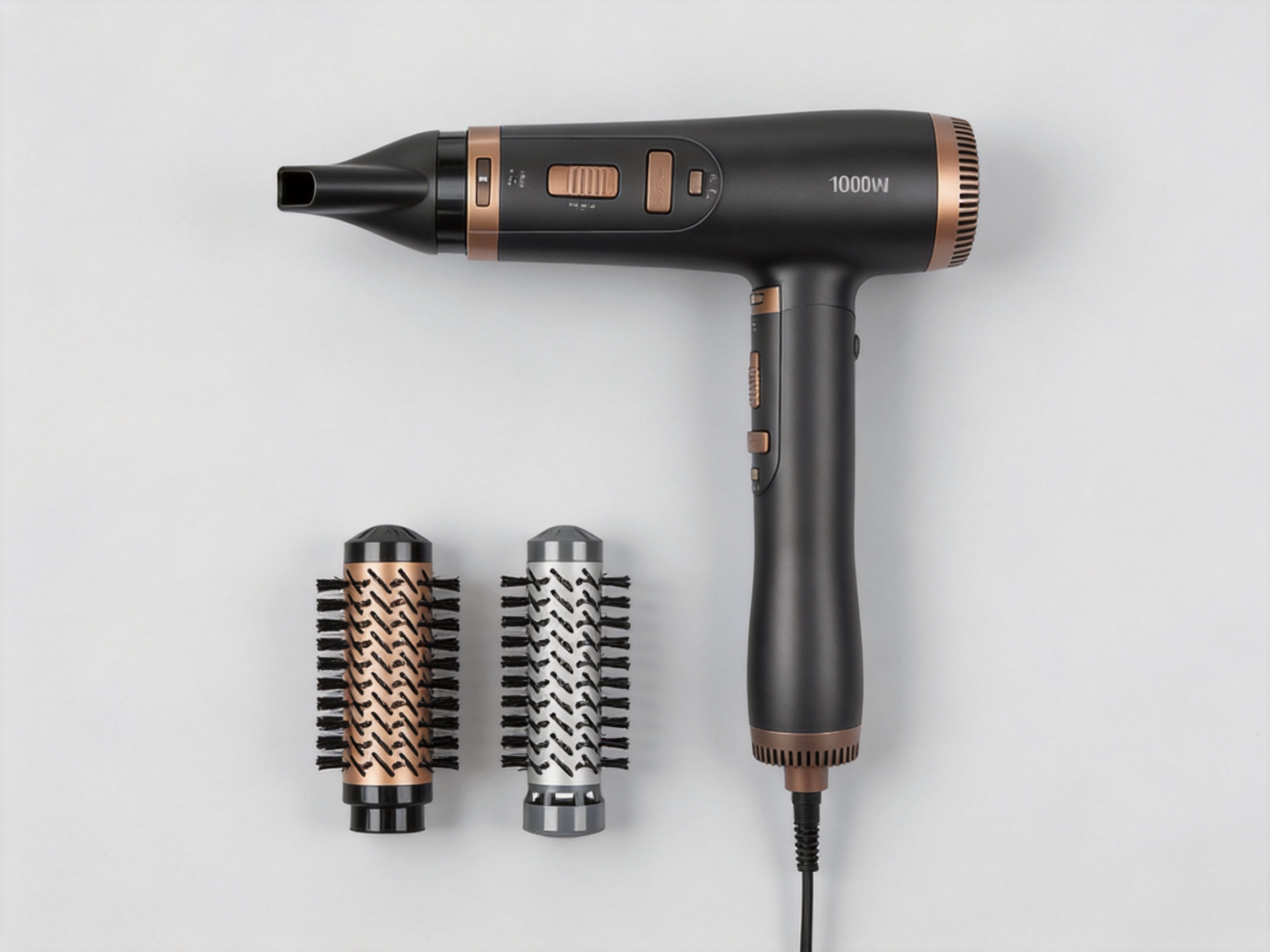
The JYS-1000D is designed around a simple but valuable concept: one main powered unit can support multiple styling methods. With the brushes attached, it works as a hot air styling brush. With the attachments removed, the host can function as a standalone hair dryer. This modular approach allows users to choose the configuration that best matches the task instead of purchasing separate appliances for drying and styling.
For a consumer, this means fewer products occupying storage space and fewer cords competing for access to an electrical outlet. For retailers, it creates a broader selling proposition because the product can be positioned as a multifunctional styling solution rather than as a single-purpose brush. For distributors and private-label customers, the design can support multiple market segments, including home users, travel consumers, beauty retailers, and professional salons.
The two detachable brushes are a central part of the product concept. Different brush shapes and surfaces can be selected for different styling preferences, such as adding volume, guiding the hair into a smoother shape, or creating a more polished finish during drying. The exact attachment configuration can be adapted according to project requirements, packaging plans, and target-market positioning. Because the brushes can be removed and installed, the user has greater control over the product’s function and storage.
Many entry-level hot air brushes combine the barrel, brush, motor, heater, and controls into a fixed structure. That approach may be adequate for a narrow styling purpose, but it can make the appliance less flexible. If the user wants to dry hair without the brush, or use a different brush geometry, a fixed model cannot easily accommodate that need. The JYS-1000D responds to this limitation with a detachable structure and a host unit that remains useful on its own.
The 1000W power output also places the appliance in a practical range for a multifunctional hot air styling tool. It provides the energy needed for drying and shaping while remaining suitable for normal household use when operated according to the instructions and the electrical configuration selected for the target market.
Independent Airflow and Temperature Controls
The most important product distinction is the independent control system. The wind speed is managed separately from the temperature. The airflow control offers two operating levels, described as 0, slow, and fast, while the temperature control provides cool, warm, and hot modes. This arrangement lets users determine how strongly air moves through the hair and how much heat is applied without forcing both settings to change together.
Independent adjustment is particularly useful because hair is not uniform. Fine or fragile hair may benefit from a lower temperature combined with gentle airflow. Thick or dense hair may require stronger airflow during the initial drying stage, followed by a moderate heat setting for shaping. Users who are finishing a style may prefer warm air for controlled smoothing or cool air to help complete the styling process. A combined switch system often gives users fewer practical choices, while the JYS-1000D provides a more deliberate adjustment experience.
The separate controls also improve the product’s usefulness across different styling stages. During pre-drying, the user can choose fast airflow to remove excess moisture. During brushing and shaping, the user can reduce the airflow or select a more moderate setting for greater control. At the finishing stage, the cool mode can be selected when the user wants a less intense heat experience. This makes the product feel closer to a professional styling tool while remaining accessible to home users.
From a product-development perspective, independent controls are also a strong selling point because they are easy to communicate. Retail packaging, product pages, demonstrations, and sales training can all explain the benefit in simple language: the customer controls airflow and heat separately. This is more meaningful than simply listing several settings without explaining how they work together.
Independent adjustment can also help a buyer create a more inclusive product range. Different customers have different hair textures, lengths, styling habits, and heat preferences. A tool with more flexible control can appeal to a broader audience than a product designed around only one styling method. This wider usability can support stronger retail positioning and reduce the need to divide customers among several basic models.
Modular Brush Design and Everyday Convenience
The JYS-1000D includes two brushes that can be removed and installed according to the user’s needs. A detachable brush system offers several practical benefits. It simplifies storage, allows the user to select the preferred attachment, and makes the host unit available for use as a dryer. It can also make the product easier to package in a way that clearly communicates its multifunctional value.
For daily styling, the attachments help guide hair while warm air is delivered through the brush area. This can make the process more coordinated than holding a conventional hair dryer in one hand and a separate brush in the other. Users can dry and shape at the same time, which may reduce the number of tools needed and make the morning routine more efficient.
For consumers with limited storage, the removable structure is especially useful. The appliance can be separated into a main unit and attachments rather than stored as one long or bulky product. The modular design is also convenient for travel because users can pack only the attachments they expect to use. This flexibility is a meaningful advantage over fixed hot air brushes that cannot be adapted to different packing or styling needs.
In a salon or professional environment, interchangeable attachments can support different customer requirements. A stylist may use one brush for a fuller shape and another for a smoother finish. Independent controls allow the stylist to adapt heat and airflow to the hair condition and desired result. Although the product is compact, its operating logic reflects the customization expected in professional styling equipment.
The detachable structure can also contribute to product differentiation for OEM and ODM programs. Buyers may request alternative brush shapes, colors, surface finishes, attachment combinations, or package configurations. A modular platform can provide a foundation for multiple versions without requiring an entirely unrelated product concept for every market. This can simplify product-line planning and help brands offer good, better, and premium packages based on attachment selection and optional features.
Performance Benefits of a 1000W Styling Platform
The JYS-1000D uses a 1000W power output, supporting the core requirements of a hot air brush and standalone dryer. Power is important because the appliance must move air and generate heat at the same time. A suitable output helps the tool perform efficiently during drying and styling, particularly when the user is working with longer or denser hair.
Power alone does not determine the quality of a styling tool. The usefulness of the appliance depends on the relationship between the motor, airflow path, heating system, brush structure, controls, and safety components. The JYS-1000D combines its 1000W platform with two airflow levels and three temperature modes, giving the user a practical method for managing the available power.
During initial drying, faster airflow can help remove moisture more efficiently. When the user begins shaping the hair, a lower airflow or moderate temperature can provide more control. The cool setting gives the product an additional operating mode for users who want a cooler finishing experience. This combination is more versatile than a simple on-and-off heating system.
The model is specified for AC 110V and AC 220V–240V markets, with frequency configured according to the electrical requirements of the destination market. For international buyers, voltage and frequency should be confirmed during project development so that the final product, plug, labeling, testing, and packaging match the intended country or region. This flexibility is valuable for exporters and private-label companies that serve multiple markets.
A 1000W product can also be positioned effectively in a retail range. It offers a clear performance message without relying solely on premium features. When combined with detachable brushes, independent controls, thermal protection, and an optional ionic function, the appliance can occupy a strong middle or upper-middle position depending on the final materials, packaging, and branding selected by the buyer.
Optional Ionic Function for Smoother Styling
The JYS-1000D can be equipped with an optional ionic function. Ionic technology is commonly used in hair-care appliances to help reduce static and support a smoother styling experience. Negative ions may help neutralize static electricity and improve the feel and appearance of hair after drying, although the visible result naturally depends on hair condition, humidity, styling technique, and other factors.
Making the ionic function optional provides flexibility for buyers. Not every market requires the same feature set, and not every retail channel has the same price target. A value-oriented product may focus on the core modular design, while a more feature-rich version may add ionic functionality and use it as a central marketing message. This allows the same basic platform to support different commercial strategies.
For consumers, the ionic option can be relevant to concerns such as frizz, flyaways, and static. These concerns are particularly noticeable in dry environments or during colder seasons. By offering an ionic version, a brand can appeal to customers who are familiar with ionic dryers and expect this technology in modern hair-care appliances.
For OEM and ODM customers, optional technology also creates a straightforward route to portfolio expansion. A buyer may introduce a standard model first and later develop an upgraded version with ionic functionality. The same approach can be used for different colors, accessory combinations, or packaging tiers. Such flexibility helps reduce the risk of launching a product range that is too narrow or too expensive for the target audience.
Safety Features for Responsible Operation
Heat-producing appliances must be designed with safety in mind. The JYS-1000D includes an internal thermal protector to help prevent overheating. This component is an important part of the product’s safety architecture because it is intended to respond if the internal temperature rises beyond an appropriate operating level.
A thermal protector does not remove the need for responsible use. Users should follow the operating instructions, keep air inlets and outlets clear, avoid covering the appliance during operation, and disconnect the power after use. Retailers and brand owners should provide clear instructions and warning information appropriate for the destination market. Proper user education works together with built-in safety components to support a safer product experience.
Safety is also important from a sourcing and compliance perspective. SHAOXING BANGSHUO ELECTRICAL APPLIANCE CO., LTD. reports experience with international certifications and compliance programs, including TUV GS, CE, CB, ERP, REACH, PAHS, ROHS, and SCCP. The company has also successfully passed BSCI and BEPI audits. The specific certification scope, validity, and applicability should be verified for each product version and destination market, but this background demonstrates familiarity with the documentation and quality expectations associated with international distribution.
For buyers, a supplier’s ability to discuss safety early in the development process is a significant advantage. Electrical ratings, insulation, thermal protection, plug types, labeling, packaging warnings, user manuals, and testing requirements must be considered as one coordinated project. A supplier with experience in these areas can help reduce avoidable delays and improve communication between engineering, compliance, and purchasing teams.
360-Degree Swivel Cord and Handling Comfort
The appliance is equipped with a 360-degree rotating power cord. Cord management may appear to be a small detail, but it has a direct effect on the handling experience. A fixed cord can twist as the user changes hand position or moves the appliance around the head. Over time, repeated twisting may make the cord feel inconvenient and can create unnecessary stress at the connection point.
A swivel cord allows the cable to rotate more naturally as the appliance is moved. This can help reduce tangling and improve freedom of movement during styling. The feature is useful for home users who may work in front of a mirror, as well as salon professionals who need to move around a client or change position frequently.
The rotating cord also supports the product’s professional appearance. Customers often judge the quality of a styling tool through small physical details, including cord flexibility, switch feel, attachment fit, balance, and surface finish. A 360-degree cord communicates that the product has been designed for active handling rather than occasional, stationary use.
For a brand owner, the swivel cord can be included in product demonstrations and visual communication. It is a feature that can be shown easily in photographs and videos without complex technical explanation. Clear demonstrations can help consumers understand why the product is more convenient than a basic model with a rigid cable.
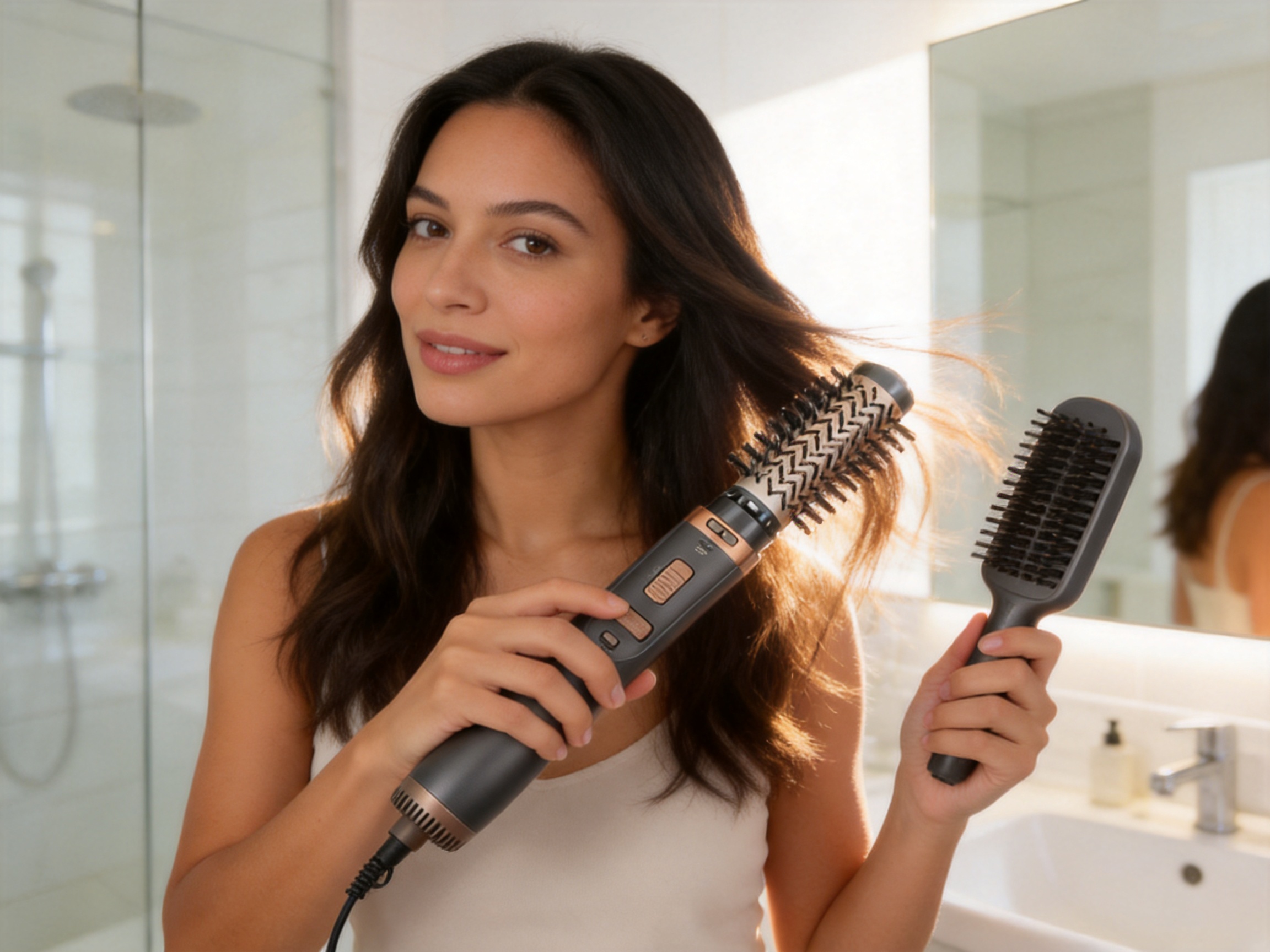
Advantages Compared with Conventional Hot Air Brushes
When comparing hot air brushes, buyers should look beyond wattage and appearance. A product may have an attractive shape but provide limited control, a fixed brush, or no standalone drying function. The JYS-1000D creates differentiation through the combination of independent settings, modular attachments, safety protection, cord mobility, and optional ionic technology.
| Evaluation Area | JYS-1000D Design | Practical Advantage |
| Airflow control | Separate 0, slow, and fast selection | Allows users to adjust air movement without automatically changing heat |
| Temperature control | Separate cool, warm, and hot modes | Supports different hair conditions and styling stages |
| Brush configuration | Two detachable and interchangeable brushes | Provides more than one styling approach and simplifies customization |
| Host unit | Can be used without a brush | Functions as a standalone hair dryer when required |
| Power | 1000W | Provides a practical platform for drying and shaping |
| Safety | Internal thermal protector | Helps protect against excessive internal temperature |
| Cord design | 360-degree swivel rotation | Improves maneuverability and helps reduce tangling |
| Ionic technology | Available as an option | Supports differentiated versions for different price points and markets |
The first advantage is control. Some competing hot air brushes use a single selector that combines temperature and airflow into a limited number of presets. This can make the product easy to operate, but it also reduces the user’s ability to fine-tune the experience. The JYS-1000D gives the user two independent variables to manage.
The second advantage is functionality. A fixed brush tool cannot easily become a regular dryer. The JYS-1000D can serve both purposes, increasing its value per purchase. This is particularly attractive to consumers who want to reduce the number of appliances in their bathroom or travel bag.
The third advantage is product-line flexibility. Two interchangeable brushes and an optional ionic function create opportunities for multiple configurations. A buyer can develop a standard model, an upgraded ionic model, a salon-oriented package, or a travel-focused package without losing the central product identity.
The fourth advantage is usability. A swivel cord and removable attachments make the appliance easier to handle and store. These improvements may not be as visible as a high wattage number, but they influence whether customers enjoy using the product repeatedly and whether they consider it convenient enough for everyday styling.
Home Styling Applications
At home, the JYS-1000D can support the complete styling process from moisture removal to finishing. Users can begin with the host unit or an attached brush, select a suitable airflow level, and then choose the desired temperature. The product can be used for ordinary drying, smoothing, shaping, volume-focused styling, or finishing work depending on the attachment and technique.
Its independent controls are useful in shared households. One person may prefer warm air and gentle airflow, while another may prefer stronger airflow for faster drying. Because the settings are not locked together, the same appliance can accommodate different habits without requiring a separate product for every user.
The model may also be suitable for users who are building a simplified personal care routine. Instead of keeping a hair dryer, styling brush, and multiple basic tools on the counter, the user can rely on one modular device. This does not mean that one appliance replaces every specialized salon tool, but it can provide a practical solution for everyday drying and shaping.
For people who style their hair before work or school, speed and convenience are important. The fast airflow setting can be used for initial drying, while the brush attachments can help combine drying and shaping. The cool mode can be selected when the user wants to finish with less heat. The result is a more organized routine with fewer tool changes.
Travel and Compact Living
The detachable design is also relevant to travel. Users can remove the brushes, place the components into a suitable bag, and select only the attachment they expect to use. This can make packing more flexible than carrying a fixed, elongated styling tool. The product can be especially useful for business travel, short holidays, and people who move between different residences.
Consumers living in smaller homes or apartments may also value the modular structure. Storage space is often limited, and multifunctional appliances can reduce clutter. A product that performs as both a hair dryer and a hot air brush has a clear practical benefit when every cabinet or drawer must be used efficiently.
International buyers should note that travel positioning must be matched to the final electrical configuration. A unit designed for one voltage market may not be suitable for direct use in another market without the correct specification or an appropriate converter. Therefore, voltage, frequency, plug, labeling, and user instructions should be confirmed during product development rather than assumed from the general model description.
Professional Salon and Beauty Business Applications
In professional salons, tools are expected to handle repeated use while giving stylists adequate control. The JYS-1000D’s separate airflow and temperature settings can help stylists adapt the tool to different hair lengths, textures, and styling objectives. The interchangeable brushes may also support different finishing methods during a working day.
The standalone host function can be useful when a stylist needs a dryer without an attached brush. For example, the host may be used for general drying before the stylist switches to a brush attachment for shaping. This avoids having to reach for a separate basic dryer during the same appointment.
The swivel cord contributes to salon ergonomics. Stylists often work from different angles and may rotate the appliance continuously as they move around the client. A cord that can turn with the tool is more convenient than one that constantly twists against the user’s hand.
Professional buyers also pay attention to maintenance, attachment handling, packaging, and replacement planning. A detachable platform can make it easier to organize attachments and create accessory programs. During OEM or ODM discussions, buyers may explore additional brush configurations, replacement attachment availability, color coding, or package variations for different salon channels.
Manufacturing Experience and Product Development Strengths
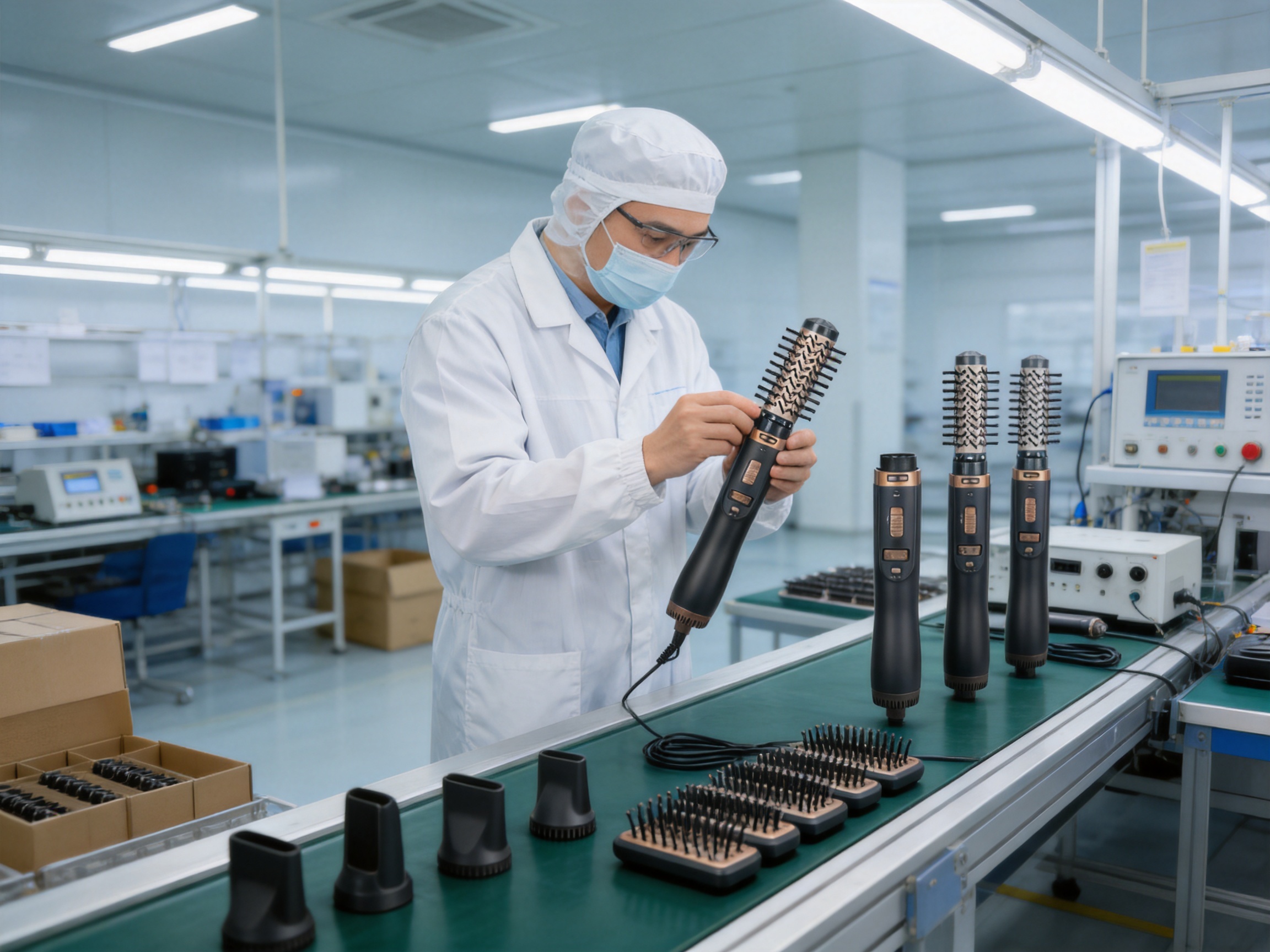
The performance of a finished hair tool depends not only on its design but also on the supplier’s ability to turn that design into consistent production. SHAOXING BANGSHUO ELECTRICAL APPLIANCE CO., LTD. operates as a professional manufacturer of small electrical appliances and provides OEM and ODM services. The company’s earlier factory identity, YUYAO JOYS ELECTRICAL APPLIANCE CO., LTD., and its newer manufacturing identity reflect the company’s development across facilities and business stages.
The company was founded in 2009 and has experience in developing and creating new products. This background is relevant to buyers who need more than a catalog item. OEM customers may require logo application, packaging changes, electrical adaptations, color selection, manuals, and market-specific documentation. ODM customers may need assistance with product structure, feature planning, appearance development, and the transition from concept to mass production.
The manufacturer reports a professional team of more than 140 people and four production lines. Its stated monthly output is approximately 300,000 sets, with annual shipments exceeding three million units. These figures indicate a production organization capable of supporting significant order volumes, subject to the specific model, capacity schedule, materials, and quality requirements of each project.
Production capacity matters because a successful product launch can create demand quickly. A supplier must be able to support initial sampling, pilot production, repeat orders, seasonal increases, and replenishment. A factory with established production lines and a broad small-appliance focus may be better positioned to coordinate these stages than a trading company with limited direct manufacturing resources.
The company exports to more than 30 countries and regions and has maintained long-term cooperation with internationally recognized customers, including ALDI, ELLE, COSMOPOLITAN, and TRISTAR. Such experience suggests familiarity with international purchasing procedures, packaging expectations, inspection requirements, and communication across different markets. Each new project still requires its own verification, but an established export background can help reduce friction during cooperation.
Manufacturing Process from Concept to Shipment
A reliable OEM or ODM project generally follows several coordinated stages. The first stage is market and product definition. The buyer identifies the target customer, retail price, required features, electrical market, attachment combination, packaging format, and desired delivery schedule. For the JYS-1000D platform, this stage may include a decision about whether the ionic function should be included as standard or offered as an upgraded option.
The second stage is technical confirmation. The buyer and manufacturer review power output, voltage, frequency, plug type, control structure, thermal protection, cord requirements, brush design, materials, color, and labeling. Technical details should be recorded clearly so that the approved sample and mass-production product remain aligned.
The third stage is appearance and packaging development. A buyer may choose a private-label identity, color palette, logo placement, carton structure, inner tray, instruction manual, and retail graphics. Because the JYS-1000D has several visible selling points, the packaging can communicate independent controls, two interchangeable brushes, standalone dryer use, thermal protection, swivel cord, and optional ionic functionality in a clear hierarchy.
The fourth stage is sample evaluation. Samples allow the buyer to check dimensions, attachment fit, control operation, airflow, temperature behavior, cord movement, appearance, labels, and packaging. Sample evaluation is also the right time to review ergonomics. The product should be comfortable to hold, easy to switch between settings, and intuitive to assemble.
The fifth stage is pilot production and quality confirmation. The factory checks whether the approved design can be produced consistently at scale. This stage can reveal issues related to assembly sequence, component tolerances, attachment fit, surface finish, printing, or packaging protection. Resolving such matters before full production can help reduce rework and customer complaints.
The sixth stage is mass production, inspection, and shipment. Quality control may include incoming material checks, assembly checks, functional testing, electrical safety testing, visual inspection, packaging verification, and sampling inspection. The exact procedures depend on the contract, destination market, certification requirements, and buyer’s quality standard.
A manufacturer with experience across these stages can provide greater continuity. Instead of dividing design, sourcing, assembly, testing, and documentation among unrelated companies, the buyer can coordinate with one experienced production partner. This can simplify communication and make responsibility clearer.
Quality, Compliance, and International Market Readiness
Hair-care appliances are sold in markets with different electrical, chemical, environmental, and consumer-safety requirements. A manufacturer serving international customers must understand that compliance is not a single universal label. Requirements depend on the destination country, product version, electrical rating, materials, packaging, and sales channel.
SHAOXING BANGSHUO ELECTRICAL APPLIANCE CO., LTD. reports certifications and compliance experience including TUV GS, CE, CB, ERP, REACH, PAHS, ROHS, and SCCP. These standards and programs cover different aspects of product safety, energy efficiency, chemical restrictions, and market access. Buyers should confirm the precise documents applicable to the JYS-1000D configuration they intend to purchase, including any differences between 110V and 220V–240V versions.
The company also reports successful BSCI and BEPI audits. These audits relate to social responsibility and environmental practices, and they can be relevant to retail groups and international brands that evaluate supplier performance beyond product cost. Responsible sourcing policies increasingly consider working conditions, environmental management, ethical business practices, and supply-chain transparency.
Compliance should be integrated into product development from the beginning. Changing a component, cord, plug, heater, plastic material, or packaging label late in the project may affect testing and delivery. Early technical review is therefore one of the most effective ways to control risk. Buyers should provide destination-market information as early as possible so the factory can align the product and documentation accordingly.
OEM and ODM Opportunities
The JYS-1000D can be supplied as a defined product model, but its modular platform also creates opportunities for customization. OEM buyers may request branding, colors, packaging, manuals, labels, and market-specific electrical configurations. These changes can help a retailer or distributor build a consistent product identity while using an established technical platform.
ODM buyers may want to go further by adjusting the attachment combination, developing a new appearance, adding ionic functionality, refining the control layout, or creating a related family of products. The manufacturer’s experience in developing small appliances can support a more collaborative process in which product planning and production engineering are considered together.
Customization should be managed carefully. Every new feature can affect tooling, testing, cost, minimum order quantity, lead time, and certification. A strong supplier helps the buyer distinguish between changes that are simple and changes that require engineering validation. This practical assessment is essential for keeping a project commercially viable.
A modular platform can also support brand segmentation. One version may include two brushes and the core controls. A higher version may add ionic technology, premium packaging, or an expanded attachment set. A salon version may emphasize durability, cord handling, and professional instructions. Such segmentation allows a brand to address multiple customer groups without developing an entirely new product architecture for each one.
Why the Factory’s Scale Matters to Buyers
Factory scale is not simply a matter of large numbers. It affects purchasing continuity, engineering support, production scheduling, material planning, quality management, and communication. A manufacturer with four production lines and a large professional team can potentially coordinate several product families and maintain a more stable supply structure.
Monthly output of approximately 300,000 sets provides an indication of production capability, although actual availability depends on current orders and the model selected. Buyers should still confirm minimum order quantities, sample lead time, production lead time, packaging requirements, and capacity reservations before placing an order.
Experience with annual shipments exceeding three million units also suggests familiarity with export logistics and order administration. International projects require more than assembly. They involve commercial invoices, packing lists, carton marks, shipping schedules, inspection records, product documentation, and communication among factories, freight partners, importers, and retailers.
Long-term cooperation with well-known customers can also encourage disciplined production practices. Large and recognized retail or brand customers commonly require clear quality standards, delivery expectations, and corrective-action procedures. A supplier accustomed to such expectations may be better prepared to support buyers who need repeatable quality and professional project management.
Product Positioning for Retail and Distribution
The JYS-1000D can be positioned around several strong messages: independent control, multifunctional operation, two interchangeable brushes, standalone dryer use, thermal protection, a 360-degree swivel cord, and optional ionic technology. These messages are understandable to consumers and can be adapted to online product pages, retail cartons, sales presentations, and distributor catalogs.
For online retail, the independent-control concept should be explained visually and in concise language. Buyers should immediately understand that airflow and temperature can be adjusted separately. Product photography can show the host unit, both brushes, control switches, and the attachment process. Demonstration content can show how the product changes from a standalone dryer into a hot air brush.
For physical retail, packaging should communicate the product’s multifunctional value without becoming crowded. The key selling points can be arranged in order of importance: two-in-one operation, independent controls, two brushes, optional ionic function, safety protection, and swivel cord. Clear icons and short explanations can help consumers compare the product with simpler hot air brushes.
For distributors, the product offers a useful balance between broad consumer appeal and technical differentiation. It is not dependent on one narrow styling trend. Its value comes from practical features that remain relevant over time, including flexibility, ease of use, and multifunctional operation.
Responsible Use and Care Recommendations
Users should read the instruction manual before operating the appliance. The correct voltage and frequency must be confirmed before connection to a power supply. The air inlet and outlet should remain unobstructed, and the appliance should not be operated in conditions that expose it unnecessarily to water or other liquids.
Users should select a temperature and airflow combination appropriate for their hair and styling objective. Lower settings may be preferred for delicate or heat-sensitive hair, while stronger airflow can be useful during initial drying. The appliance should be kept moving rather than held against one area of hair for an extended period.
Attachments should be installed and removed according to the manufacturer’s instructions. The appliance should be allowed to cool before storage, and the cord should not be wrapped tightly around the body. The swivel function is intended to support movement during use, not to encourage forceful twisting or pulling of the cable.
Regular care helps preserve performance. Loose hair and dust should be removed from accessible areas as recommended in the manual. The product should be stored in a dry location, and any signs of damage to the cord, housing, controls, or attachment connection should be addressed before further use.
Q&A: Common Questions about the Independent-Control Hot Air Brush
Can the host unit be used without a brush?
Yes. The host unit is designed to function independently as a standalone hair dryer. Users can remove the brush attachment when they want to dry hair without brushing or shaping at the same time.
How many brushes are included?
The standard product description includes two detachable and interchangeable brushes. The attachments can be selected according to the desired styling method, and buyers may discuss attachment configurations for OEM or ODM projects.
Are the airflow and temperature controls separate?
Yes. The product uses separate controls for airflow and temperature. Airflow is available through two operating speeds, represented as 0, slow, and fast, while temperature includes cool, warm, and hot modes.
What is the benefit of independent controls?
Independent controls allow users to choose airflow and heat separately. This makes it easier to use stronger airflow with moderate heat, gentle airflow with warm air, or a cool setting for finishing, depending on personal preference and styling requirements.
Does the product have a thermal safety feature?
Yes. The appliance includes an internal thermal protector designed to help prevent overheating. Users should still follow all operating instructions and keep the air openings clear during use.
Does it include ionic technology as standard?
The ionic function is optional. Buyers can discuss whether to include ionic technology based on the target market, price level, product positioning, and desired feature set.
What is the purpose of the 360-degree swivel cord?
The swivel cord allows the cable to rotate as the appliance is moved. This helps improve maneuverability and reduce cord tangling during home or professional styling.
What voltage versions are available?
The product specification supports AC 110V and AC 220V–240V configurations. The final voltage, frequency, plug type, labeling, and testing should be confirmed according to the destination market before production.
Is the product suitable for travel?
The detachable structure can make the product more convenient to pack because users can separate the host and brushes. Travel suitability still depends on the electrical configuration and the requirements of the destination country.
Can the product be customized with a private label?
Yes. SHAOXING BANGSHUO ELECTRICAL APPLIANCE CO., LTD. provides OEM and ODM services. Buyers can discuss branding, colors, packaging, manuals, attachment combinations, ionic functionality, and other project requirements.
What types of customers can use this product?
The product is suitable for home users, travelers, beauty retailers, salons, distributors, and private-label brands. Its combination of drying and styling functions allows it to serve more than one customer segment.
What should buyers confirm before placing an order?
Buyers should confirm the electrical specification, attachment set, ionic option, colors, branding, packaging, certifications, minimum order quantity, sample approval process, production schedule, inspection requirements, and shipping documentation. Clear confirmation at the beginning helps ensure that the delivered product matches the intended market.
Conclusion
The JYS-1000D 1000W Independent Control Hot Air Brush is built around flexibility. Its host unit can be used independently, its two brushes can be removed and interchanged, and its airflow and temperature settings can be adjusted separately. These features give the product a practical advantage over conventional hot air brushes that provide only one fixed styling configuration.
The appliance combines two airflow levels, three temperature modes, a 1000W power output, an internal thermal protector, a 360-degree swivel cord, and an optional ionic function. Together, these features support home styling, travel convenience, salon use, and differentiated retail positioning. The modular design also creates opportunities for OEM and ODM buyers seeking a product platform that can be adapted to several markets.
Behind the product is a manufacturer with experience in small electrical appliances, international certifications, social and environmental audits, multiple production lines, substantial output, and more than a decade of development and export experience. SHAOXING BANGSHUO ELECTRICAL APPLIANCE CO., LTD. combines manufacturing capacity with OEM and ODM support, allowing buyers to develop products from an established platform while still pursuing their own branding and market strategy.
For consumers, the result is a more adaptable styling tool that can dry, brush, shape, and finish hair with fewer separate appliances. For commercial buyers, the result is a flexible product opportunity supported by a factory capable of serving international personal care appliance programs. As consumers continue to value convenience, multifunctionality, and controlled styling performance, independent-control hot air brushes are well positioned to become an increasingly important part of the modern hair-care appliance category.
References
1. Product specification sheet for the JYS-1000D 1000W Independent Control Hot Air Brush, including operating modes, power output, attachment structure, safety protection, cord design, and optional ionic function.
2. Manufacturer-provided company profile for SHAOXING BANGSHUO ELECTRICAL APPLIANCE CO., LTD., including factory history, production capacity, workforce, export markets, and OEM/ODM services.
3. Manufacturer-provided information regarding YUYAO JOYS ELECTRICAL APPLIANCE CO., LTD. and the company’s development from its earlier factory operation to its current manufacturing organization.
4. General product-safety principles for household electrical appliances, including thermal protection, electrical configuration, operating instructions, and responsible consumer use.
5. General hair-care appliance design considerations concerning airflow control, temperature selection, ionic technology, modular attachments, ergonomics, and cord management.
6. Manufacturer-reported international certification and audit background, including TUV GS, CE, CB, ERP, REACH, PAHS, ROHS, SCCP, BSCI, and BEPI references, subject to verification for the final product configuration and destination market.


 English
 Español