Modern hair styling tools are expected to do more than simply heat and shape hair. Consumers increasingly look for appliances that save time, reduce unnecessary heat exposure, operate quietly, support different hair types, and deliver professional results at home. Salons and professional stylists, meanwhile, need equipment that can withstand frequent use while maintaining reliable performance. A wet-to-dry high-speed hair straightener addresses these requirements by combining drying, airflow control, and straightening functions in one advanced appliance.
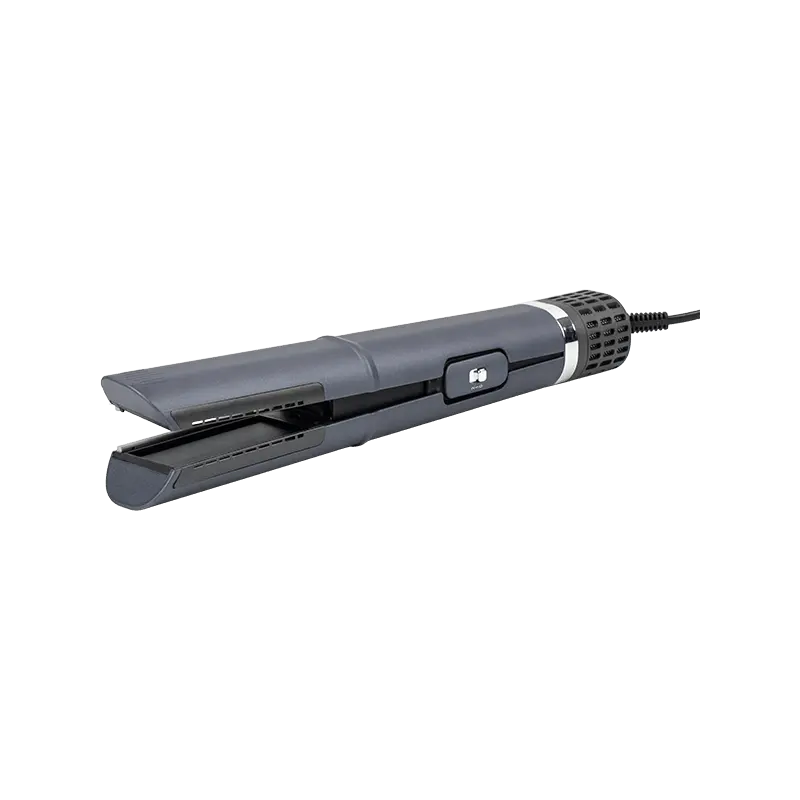
The JYS-C6 Professional 2-in-1 Wet & Dry High-Speed Hair Straightener is designed around this multi-function concept. It combines a high-speed brushless direct-current motor, controlled airflow, precision straightening plates, multiple wind speeds, nine temperature modes, protective elastic strips, optional ionic technology, and an intelligent self-cleaning function. The result is a styling tool intended to dry and straighten damp hair in a single process while also working as a conventional hair straightener and low-speed hair dryer.
Behind the product is SHAOXING BANGSHUO ELECTRICAL APPLIANCE CO., LTD., a Chinese manufacturer specializing in hair care appliances and small electrical products. With experience in product development, OEM and ODM cooperation, quality management, international certifications, and large-scale production, the company offers a manufacturing platform for customers seeking customized hair tools and personal care appliances.
The Evolution of the Professional Hair Straightener
Traditional hair straighteners generally rely on heated plates to reshape dry hair. Although this method is familiar and effective, it requires the user to dry the hair first. The complete styling routine may therefore involve washing, towel drying, blow-drying, brushing, and finally straightening. For thick, long, or highly textured hair, this process can be time-consuming and physically demanding.
Conventional hot tools can also require careful temperature selection. Excessive heat, repeated passes, or styling hair that is not sufficiently dry may increase the risk of dryness, breakage, and surface damage. As a result, professional users and consumers have shown growing interest in technologies that use airflow, more precise temperature control, and fewer styling steps.
The wet-to-dry category responds to this demand. Instead of depending exclusively on extremely hot plates, a wet-to-dry straightener uses a combination of controlled airflow and mechanical tension to remove moisture and guide strands into a smoother shape. The styling process can be more efficient because drying and straightening occur at the same time.
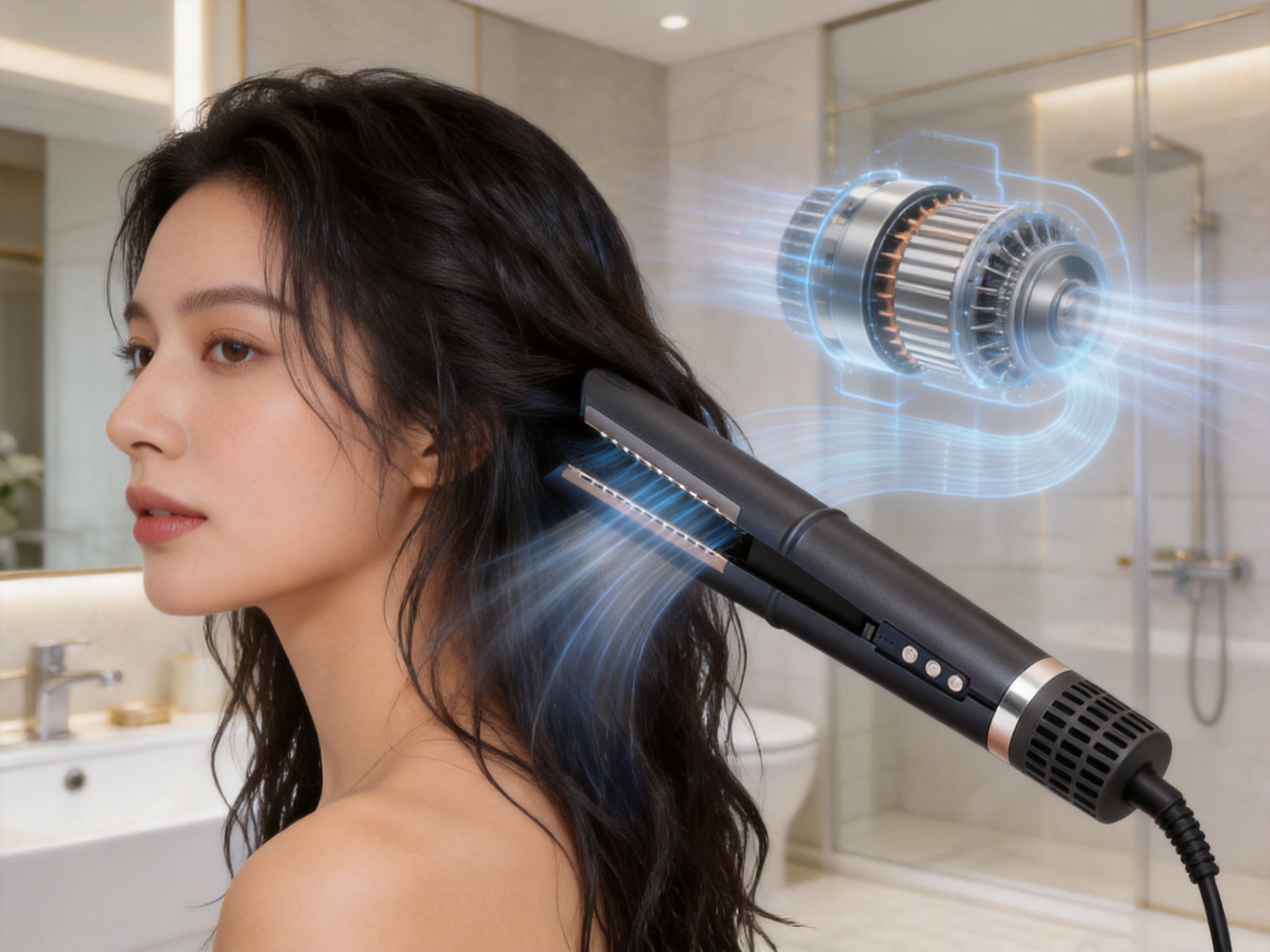
The JYS-C6 takes this approach further by incorporating a 110,000 RPM BLDC motor. The motor generates high-velocity airflow for rapid moisture removal, while the clamp plates guide and smooth the hair. This design creates a different styling experience from a conventional flat iron. It is not only a heated styling tool; it is also a high-speed airflow appliance with straightening capability.
One Appliance for Wet and Dry Styling
The central advantage of the JYS-C6 is its 2-in-1 functionality. It can be used on damp hair after washing, reducing or eliminating the need for a separate pre-drying stage. It can also be used on dry hair for finishing, smoothing, or reshaping. In addition, the appliance can operate as a low-speed hair dryer when the straightening plates are not being used.
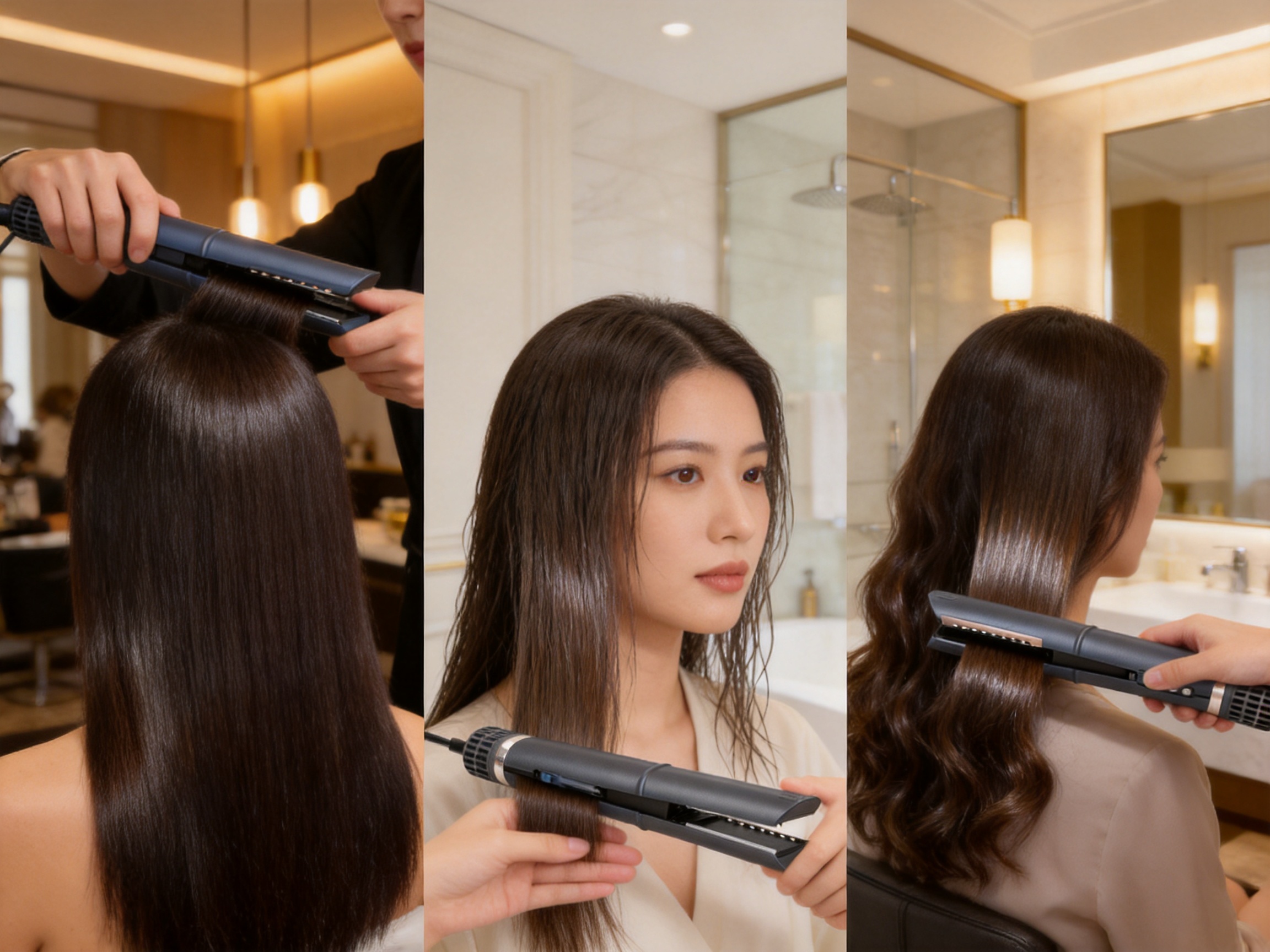
This flexibility is valuable in several situations. A busy consumer can shorten a morning routine by combining drying and straightening. A professional stylist can use one appliance during a complete styling service instead of switching repeatedly between a dryer and a flat iron. A salon can also reduce equipment clutter at the workstation.
The appliance is intended to work through airflow straightening. High-speed air moves through the styling area while the plates guide the hair. This process helps create a smooth and natural-looking finish rather than relying only on intense plate heat. Depending on hair density, length, moisture level, and user technique, the number of passes required may be reduced.
Wet-to-dry operation does not mean that the hair should be saturated with water. For best results, excess water should be removed with a towel before styling. Hair should be damp rather than dripping wet, and users should follow the operating instructions supplied with the final product configuration. This preparation helps the airflow dry the hair more efficiently and supports a more consistent styling result.
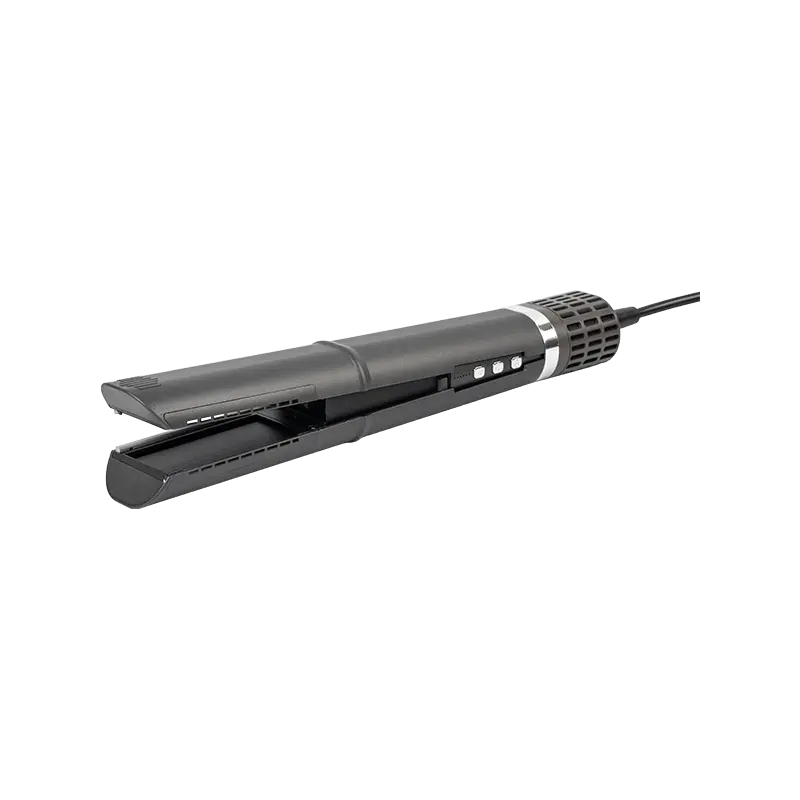
JYS-C6 Professional 2-in-1 Wet & Dry High-Speed Hair Straightener
High-Speed BLDC Motor Technology
The JYS-C6 uses a brushless direct-current motor rated at up to 110,000 revolutions per minute. A BLDC motor differs from a conventional brushed motor because electronic control replaces the physical brushes and commutator traditionally used to transfer current. This architecture can support high rotational speed, efficient operation, reduced mechanical wear, and consistent airflow output.
For a hair styling appliance, motor performance affects more than drying time. It influences airflow strength, noise characteristics, product durability, thermal management, and the user’s perception of quality. A motor that maintains stable output can provide more predictable styling across different sections of hair.
The stated motor lifespan exceeds 1,000 hours. Actual service life depends on operating conditions, cleaning, electrical stability, usage frequency, and maintenance. Nevertheless, the specification indicates that the product has been designed for substantially more demanding use than a basic occasional-use appliance.
The motor’s high speed supports the JYS-C6’s rapid-drying purpose. Airflow can help remove moisture while the plates maintain contact and tension with the hair. This is especially useful for users with long or dense hair, for whom separate blow-drying and straightening often takes considerable time.
Another benefit of a brushless motor is the potential for lower noise compared with many traditional motor designs. The JYS-C6 is described as offering ultra-low-noise operation. Noise levels can vary according to speed, airflow resistance, hair thickness, and the specific product configuration, but the motor design provides a strong foundation for a quieter user experience.
Why Motor Speed Matters in Styling
Motor speed alone does not determine styling performance. Air-channel design, inlet and outlet geometry, heating control, plate alignment, airflow distribution, and electronic control all influence the final result. The value of the 110,000 RPM motor is that it supplies a powerful airflow source that can be integrated with these other systems.
High-speed airflow helps carry heat and moisture away from the hair surface. It can also support strand alignment as the hair passes through the clamp area. When combined with an appropriate temperature setting and controlled movement, this approach may help produce a smoother, shinier appearance without depending entirely on high plate temperatures.
Precision Control with Three Speeds and Nine Temperature Modes
Hair varies considerably in texture, thickness, porosity, length, and styling history. A single speed and temperature setting cannot provide the same level of control for every user. The JYS-C6 therefore offers three wind speeds and nine temperature modes across cool, low, moderate, and high heat ranges.
The three wind speeds allow users to choose between a gentler airflow for delicate or fine hair and a stronger airflow for thicker or wetter hair. Lower airflow can also be useful during finishing work, when the user wants more control over a small section. Higher airflow is suited to the initial drying and straightening stage.
The nine temperature modes provide more adjustment than basic straighteners that offer only one or two heat levels. Fine, chemically treated, or fragile hair may benefit from a lower setting, while thick or resistant hair may require a higher setting. Users should begin with a lower temperature and increase it only when necessary.
The cool setting can be useful for finishing and helping the hair maintain its shape after styling. Cool airflow may also be preferred by users who want to reduce heat exposure. The low, moderate, and high heat groups provide a practical framework for matching the appliance to different hair conditions.
Feature |
JYS-C6 Specification |
Practical Benefit |
Motor |
BLDC motor, up to 110,000 RPM |
High-speed airflow, efficient drying, and reduced mechanical wear |
Motor lifespan |
More than 1,000 hours |
Suitable for frequent home or professional operation |
Wind control |
Three speeds |
Adjustment for different hair textures and styling stages |
Temperature control |
Nine modes |
More precise control for different hair types |
Operating voltage |
AC 120V, 60Hz, or AC 220V–240V, 50Hz–60Hz |
Configuration options for important international markets |
Power |
1,200W at 120V; 1,200W–1,400W at 220V–240V |
Powerful airflow and drying performance |
Additional functions |
Self-cleaning, energy-saving mode, optional ionic function |
Improved convenience, maintenance, and styling flexibility |
Cord design |
360-degree swivel rotation |
Reduced tangling and greater freedom of movement |
Protective Elastic Strips in the Clamp Plates
The clamp area is one of the most important parts of a straightener. If the plates grip too aggressively, hair can be pulled, snagged, or subjected to unnecessary mechanical stress. If the plates do not maintain adequate contact, the user may need to repeat the same pass several times.
The JYS-C6 includes two elastic strips in the clamp plate assembly. These movable strips are designed to help protect the hair as it passes through the appliance. They can provide a more forgiving contact surface, reduce painful pulling, and help maintain controlled pressure across different hair thicknesses.
The elastic strips also support the wet-to-dry function by helping remove residual moisture from the hair as the section moves through the clamp. This does not replace airflow; rather, it complements the drying process by encouraging consistent contact between the hair and the styling area.
Protective components such as these are important differentiators in a professional hair tool. Performance should not be judged only by maximum heat or motor speed. The way the appliance handles hair mechanically can have a major effect on comfort, styling consistency, and the user’s willingness to use the product regularly.
Airflow Straightening and Hair Appearance
Airflow straightening is designed to produce a smooth, natural, and shiny appearance while drying the hair. The technique uses a combination of directional air, controlled temperature, and plate guidance. Instead of pressing dry hair between very hot surfaces alone, the appliance supports the shape through airflow and tension.
This can be advantageous for users who prefer a straight finish with natural movement. Hair may appear polished without looking excessively flat, depending on the user’s technique and the hair’s natural characteristics. The appliance can also be used to refine ends, smooth the surface layer, and control frizz after the main drying stage.
Results depend on section size and movement speed. Smaller sections generally permit better airflow exposure and more even control. Moving the appliance steadily from the roots toward the ends can support alignment, while pausing in one area for too long should be avoided. Users should also follow appropriate heat-protection practices, particularly when working with colored, bleached, or chemically treated hair.
The airflow system is especially relevant to the product’s competitive positioning. Many conventional straighteners perform well on dry hair but cannot replace a dryer. A standard dryer can remove moisture but may require a separate brush or straightener for a sleek finish. The JYS-C6 is designed to combine these steps in a single styling platform.
Optional Ionic Technology
The JYS-C6 can be configured with an optional ionic function. Ionic hair tools are designed to release negative ions into the airflow. These ions may help reduce static electricity, support moisture management on the hair surface, and improve the appearance of frizz-prone hair.
Static is often more noticeable in dry environments, during winter, or when hair is fine and lightweight. By helping neutralize electrical charge, ionic technology may make the hair feel smoother and easier to manage. It can also contribute to a shinier visual finish when combined with suitable airflow and temperature control.
The ionic function is optional rather than universal across every configuration. This gives distributors, brand owners, and OEM customers the opportunity to select a version that matches their target market and price positioning. A basic configuration may prioritize essential wet-to-dry performance, while a premium configuration may add ionic output as a marketing and performance feature.
Ionic technology is not a replacement for appropriate hair care. It should be considered one part of a complete styling system that includes temperature selection, controlled movement, regular cleaning, and the use of suitable hair products when needed.
Intelligent Energy-Saving Operation
Energy efficiency is becoming increasingly important in small electrical appliances. Consumers want powerful performance, but they also expect equipment to avoid unnecessary energy consumption. The JYS-C6 includes an energy-saving operating mode that reduces the motor to low speed when the straightening plates are open and not actively being used.
This function serves several purposes. It helps reduce power consumption during pauses, lowers operating noise, and may reduce unnecessary motor stress. In a salon environment, where the tool may be placed down briefly between sections, the feature can provide practical benefits over a long working day.
The energy-saving mode also improves the user experience. Rather than continuing to operate at full speed while the appliance is temporarily idle, the tool responds to its operating condition. This type of intelligent behavior is an example of how electronic control can improve both convenience and efficiency without compromising the main styling function.
Energy consumption is affected by voltage, selected temperature, wind speed, usage duration, and operating environment. The energy-saving mode should therefore be understood as a supportive efficiency feature rather than a guarantee of a specific total energy reduction for every user.
Self-Cleaning Function for Convenient Maintenance
Hair tools can accumulate dust, hair particles, styling product residue, and other debris over time. In a high-speed airflow appliance, contamination around the air inlet, internal channels, or motor area can affect performance and may increase the burden on the motor. Regular maintenance is therefore essential.
The JYS-C6 includes a self-cleaning function activated by closing the clamp and pressing the wind-speed button for five seconds while the device is powered. According to the supplied product information, the motor automatically reverses to help clean internal components.
Reverse motor operation can assist in dislodging dust and debris from areas that are difficult to access during ordinary external cleaning. This feature helps support stable performance and may contribute to the long-term reliability of the appliance. Users should still follow the final instruction manual, keep the exterior and air openings clean, and never operate the tool in a manner that conflicts with safety guidance.
A self-cleaning system is particularly useful in professional settings. Salons may operate hair tools for many hours each day, exposing them to more hair particles and styling products than occasional home use. Simplified maintenance can help staff keep equipment in better condition and reduce interruptions caused by manual cleaning.
Safety and Electrical Configuration
The product is available for AC 120V, 60Hz markets and AC 220V–240V, 50Hz–60Hz markets. The stated power output is 1,200W for the 120V version and 1,200W–1,400W for the 220V–240V version. Correct voltage and frequency configuration is essential. Users should select the version designed for the destination market rather than assuming that a universal voltage appliance is available.
The appliance includes temperature control and a fuse as part of its stated safety provisions. Temperature control helps regulate the selected heat level, while a fuse can provide protection in the event of certain electrical faults or abnormal conditions. These components form part of a broader safety system that also includes product design, insulation, assembly quality, testing, user instructions, and appropriate certification.
Users should never use the appliance near water, immerse it in liquid, operate it with damaged wiring, or block the air inlet and outlet. The hair should be prepared according to the instructions, and the appliance should be unplugged when not in use. Professional salons should also establish inspection and cleaning procedures for frequently used electrical tools.
The 360-degree swivel power cord helps reduce twisting and tangling during styling. This is a small but meaningful ergonomic feature. A rotating cord connection can improve maneuverability, reduce strain on the cable, and make it easier to work around the head without repeatedly repositioning the appliance.
Advantages Over Conventional Styling Tools
The JYS-C6 offers several points of differentiation when compared with conventional hair straighteners and separate dryer-and-iron routines.
Reduced Number of Styling Steps
A traditional routine often requires a dryer followed by a straightener. The JYS-C6 is designed to combine drying and straightening, which can reduce preparation time and simplify the user’s routine. This is valuable for consumers with busy schedules and for stylists working under appointment time limits.
More Precise Control
Many entry-level straighteners provide only one heat setting or a small number of temperature choices. The JYS-C6 provides nine temperature modes and three wind speeds. This gives users more ability to tailor the process to fine, thick, damp, dry, fragile, or resistant hair.
High-Speed Motor Performance
The 110,000 RPM BLDC motor is a major distinction from basic DC motor products. The supplied comparison identifies the JYS-C6-B as a lower-cost model with a DC motor, one speed, two temperatures, and 600W–800W power. By contrast, the JYS-C6 offers a higher-speed BLDC motor, three speeds, nine temperatures, self-cleaning, and 1,200W–1,400W power for the appropriate voltage configuration.
Integrated Maintenance Support
The self-cleaning function is not commonly associated with basic flat irons. Its inclusion gives the JYS-C6 an advantage in convenience and helps address the maintenance demands of an airflow-based appliance.
Professional-Oriented Construction
The combination of a high-speed motor, flexible temperature control, protective elastic strips, optional ionic technology, and a swivel cord positions the product above simple entry-level styling tools. It is designed for users who value performance, versatility, and repeated operation.
Configurable Product Positioning
Optional ionic technology and multiple voltage configurations enable OEM and ODM customers to adapt the product for different markets. A distributor can position the appliance as a premium home tool, a salon product, or a technologically advanced personal care appliance depending on its branding, packaging, accessories, and market strategy.
Applications in Professional Salons
Professional salons require hair tools that combine speed, consistency, comfort, and durability. The JYS-C6 is suitable for styling workflows in which damp hair must be dried and smoothed efficiently. The high-speed motor can support rapid preparation, while the nine temperature modes provide flexibility for clients with different hair conditions.
For stylists, reducing the number of tools on the workstation can improve organization. A single 2-in-1 device may be used for initial drying, straightening, finishing, and touch-ups. The swivel cord supports movement around the client, and the elastic strips can make the clamping action more comfortable during repeated passes.
The self-cleaning function may also be valuable at the end of a busy day. Although external cleaning and professional maintenance remain necessary, the reverse-air cleaning cycle can help remove internal debris and support consistent airflow over time.
Salon owners evaluating this product should consider local electrical requirements, service support, replacement parts, staff training, cleaning procedures, and the final product configuration. The appliance’s effectiveness depends not only on specifications but also on how well it is integrated into the salon’s workflow.
Benefits for Premium Home Users
At home, the JYS-C6 is suited to consumers who want professional-style performance without maintaining a collection of separate tools. The ability to work on damp or dry hair can simplify daily styling, while the multiple settings allow the user to choose a comfortable operating level.
The product may be especially attractive to households with several users. One person may prefer cool or low heat, another may need stronger airflow for thick hair, and a third may use the appliance mainly for dry-hair finishing. The range of controls provides greater flexibility than a single-purpose straightener.
The appliance can also reduce storage requirements. Instead of keeping a dryer, a brush, and a straightener in separate locations, users may be able to complete more styling tasks with one integrated product. This is useful in compact bathrooms, apartments, hotel rooms, and travel situations where luggage space is limited.
Travel, Hospitality, and Retail Opportunities
The 2-in-1 design can be attractive to the hospitality sector. Hotels, serviced apartments, resorts, and beauty facilities may prefer versatile appliances that provide multiple functions without requiring a large equipment inventory. The appropriate voltage and plug configuration must be selected for each market and installation environment.
Travel users may also appreciate the reduced need to carry separate drying and straightening appliances. However, buyers should verify the voltage compatibility of the destination before use. A device configured for one electrical system should not be connected to an incompatible supply without an approved solution.
For retailers and private-label brands, the product offers several merchandising angles: wet-to-dry convenience, high-speed BLDC performance, professional control, optional ionic technology, energy-saving operation, and self-cleaning maintenance. These features can support different product tiers and marketing strategies.
Manufacturing Strengths and Product Development Capability
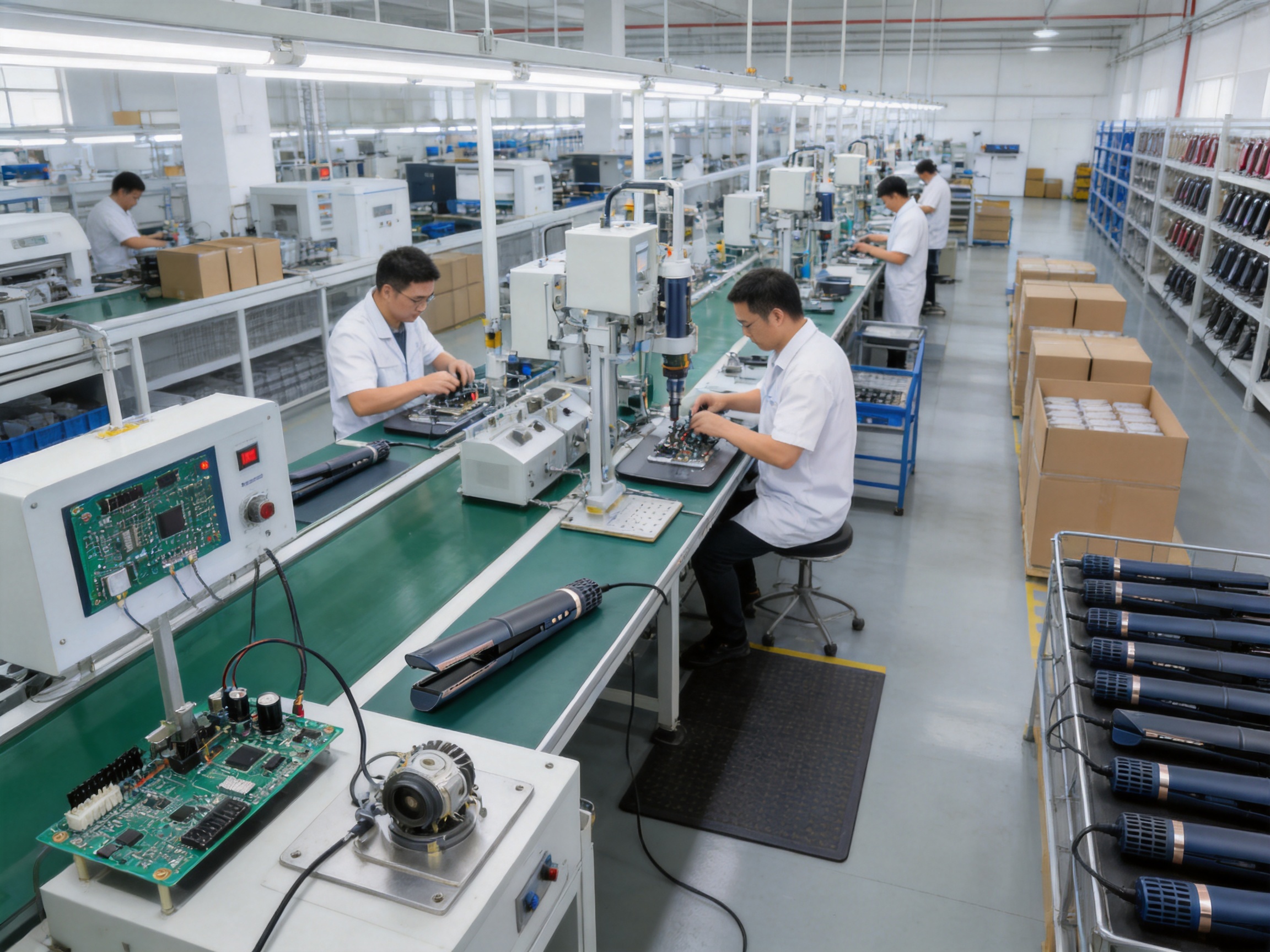
Product performance begins with design, but reliable commercial success depends on manufacturing capability. SHAOXING BANGSHUO ELECTRICAL APPLIANCE CO., LTD. develops and produces small electrical appliances with a focus on professional hair care products and smart products for healthy living.
The company was founded in 2009 and operates in Zhejiang Province, China. The business is associated with YUYAO JOYS ELECTRICAL APPLIANCE CO., LTD., described as the former factory, and the newer Shaoxing manufacturing facility. This background provides continuity of experience while supporting the expansion of production capacity and product development resources.
The factory has a professional team of more than 140 people and four production lines. Its stated monthly output is approximately 300,000 sets, with annual shipments exceeding three million units. This scale is important for customers seeking a stable supply of hair dryers, straighteners, curlers, ionic brushes, and other personal care appliances.
Production capacity also supports order planning and business continuity. A manufacturer with multiple production lines can allocate resources among product models, manage larger programs, and respond more effectively to seasonal demand. For brand owners, this may reduce the risks associated with relying on a very small production operation.
OEM and ODM Support
The company provides both OEM and ODM services. OEM cooperation allows a customer to sell a product under its own brand with agreed specifications, packaging, labeling, and market requirements. ODM cooperation can involve deeper participation from the manufacturer in product design, engineering, feature selection, and development of a differentiated model.
For a product such as the JYS-C6, OEM and ODM projects may include several customization possibilities. These can include exterior colors, surface finishes, logo placement, packaging structure, accessory combinations, user manuals, plug types, voltage versions, ionic configuration, and market-specific documentation.
Customization should be managed through a structured development process. The customer and manufacturer need to confirm the intended market, electrical standards, target retail price, performance expectations, minimum order quantities, packaging requirements, testing schedule, and delivery plan. Clear communication at the beginning helps reduce later revisions.
The manufacturer’s existing experience with hair tools can shorten development time compared with starting from an entirely new supplier. At the same time, any custom modification should be validated through engineering samples, safety evaluation, performance testing, and production trial runs before mass production.
Quality Management and International Certifications
The company states that its principal products have obtained international certifications and compliance-related qualifications including TUV GS, CE, CB, ERP, REACH, PAHS, ROHS, and SCCP. The exact applicability of each certification or declaration depends on the specific model, market, configuration, and current documentation. Customers should request the relevant certificates and test reports for the exact product they intend to purchase.
These standards and regulatory frameworks address different areas. Electrical safety, electromagnetic compatibility, energy-related requirements, restricted substances, chemical content, and market access may all be involved in the compliance process. A responsible manufacturer must coordinate design, component selection, production control, testing, and technical documentation to meet the relevant requirements.
The company has also successfully passed BSCI and BEPI audits according to the supplied information. These audits relate to social responsibility and environmental performance in the supply chain. For international buyers, such evaluations can provide additional information when selecting a long-term manufacturing partner.
Compliance is not a one-time marketing statement. It must be maintained through controlled materials, approved suppliers, consistent production processes, traceability, change management, and periodic verification. If a component, motor, heating element, housing material, or control board changes, the effect on compliance and performance should be reviewed.
Advanced Production Considerations for High-Speed Hair Tools
High-speed hair appliances require careful coordination between mechanical, electronic, thermal, and airflow systems. The motor must be correctly balanced and securely mounted. Air channels must be formed consistently. The housing must withstand heat and vibration. The control board must manage speed and temperature reliably. The clamp plates must remain aligned during repeated opening and closing.
Assembly precision is especially important for a wet-to-dry straightener. The airflow path must work together with the plates and elastic strips. Small variations in alignment can affect hair contact, airflow distribution, user comfort, and the consistency of the finished style.
Production quality control may include incoming inspection of motors, heating components, plastics, electronic parts, wiring, and fasteners. In-process checks can verify assembly torque, insulation, plate movement, switch operation, cord rotation, and housing fit. Finished-product testing can include power consumption, temperature performance, airflow, noise, leakage current, high-voltage safety, functional operation, and appearance inspection.
Burn-in or aging tests may be used to identify early component failures before shipment. Packaging inspections help ensure that products withstand transportation. For export programs, the packaging must also carry appropriate warnings, ratings, labels, barcodes, and user information for the target market.
How Manufacturing Supports Competitive Product Advantages
Competitiveness does not come from a single specification. A 110,000 RPM motor may attract attention, but the overall customer value is created by integrating that motor with suitable controls, a durable housing, effective airflow channels, comfortable plates, safe heating management, and repeatable assembly quality.
The manufacturing platform behind the JYS-C6 supports this integrated approach. Experience in hair dryers, straighteners, curlers, ionic brushes, and other appliances can help the company understand shared components and common user requirements. This knowledge can contribute to faster product development and more practical engineering decisions.
Large production capacity can also support cost control. Stable purchasing volumes for motors, electronic components, heating parts, and packaging may improve supply planning. However, cost competitiveness should not be pursued at the expense of safety, component quality, or process control. The strongest manufacturing proposition combines efficient production with reliable specifications and documented quality.
International export experience is another advantage. The company’s products are stated to be sold in more than 30 countries and regions, and it has maintained cooperation with customers including ALDI, ELLE, COSMOPOLITAN, and TRISTAR. Such experience indicates familiarity with diverse market expectations, retailer requirements, packaging standards, and product documentation processes.
Recommended User Operating Method
For damp-hair styling, begin by gently towel-drying the hair to remove excess water. Detangle the hair and divide it into manageable sections. Select a lower temperature and wind speed initially, then increase the settings if the hair requires stronger drying or shaping performance.
Place a suitable section between the plates and move the appliance gradually from the roots toward the ends. Avoid holding the tool stationary in one place for an extended period. Use smaller sections for thick or dense hair and larger sections only when the airflow can still reach the hair evenly.
For dry-hair finishing, choose a setting appropriate to the hair’s texture and condition. The appliance can be used to smooth the surface, refine the ends, control flyaways, or reshape selected sections. The optional ionic function may be helpful for reducing static and improving manageability.
After use, turn off and unplug the appliance. Allow it to cool before storage. Clean the exterior and air openings according to the instruction manual, and use the self-cleaning function as directed. Do not use water or liquid cleaners inside the appliance.
Buyer Evaluation Checklist for OEM and Wholesale Customers
Business buyers should evaluate more than the headline motor speed. The following points can help structure a product review:
First, confirm the exact electrical configuration, including voltage, frequency, plug type, rated power, and destination-market requirements.
Second, request samples that represent the final production specification rather than an engineering prototype with different components.
Third, test wet-to-dry performance on several hair types, including fine, thick, straight, wavy, and treated hair, while recording drying time and user comfort.
Fourth, verify whether the ionic function is included, optional, or excluded from the selected configuration.
Fifth, review the self-cleaning operating sequence and confirm that it is clearly explained in the user manual.
Sixth, request applicable safety certificates, test reports, declarations, factory audit documents, and quality-control procedures for the intended market.
Seventh, discuss warranty terms, spare parts, after-sales support, replacement components, packaging, production lead times, and minimum order quantities.
Finally, evaluate the manufacturer’s ability to support future revisions. A successful hair-tool program may require additional colors, improved packaging, regional versions, updated accessories, or a new model based on customer feedback.
Frequently Asked Questions
Can the appliance be used on wet hair?
It is designed for wet-to-dry styling and can be used on damp hair. Excess water should first be removed with a towel. The hair should not be dripping wet, and users should follow the final product instructions for preparation and operation.
Does the appliance replace both a hair dryer and a straightener?
The JYS-C6 is designed as a 2-in-1 hair straightener and hair dryer. It can dry and straighten damp hair and can also be used on dry hair. When the plates are not being used, it can operate at low speed as a hair dryer. The exact experience may vary according to hair type and styling technique.
What makes the BLDC motor different from a standard DC motor?
A BLDC motor uses electronic commutation rather than traditional physical brushes. This supports high rotational speed, efficient airflow, reduced mechanical wear, and potentially lower noise. The JYS-C6 motor is rated at up to 110,000 RPM and has a stated lifespan exceeding 1,000 hours.
How many temperature and wind settings are available?
The appliance provides three wind speeds and nine temperature modes covering cool, low, moderate, and high heat ranges. This allows users to adjust the appliance for different hair types and styling stages.
How does the self-cleaning function work?
According to the supplied product information, the user should plug in the appliance, close the clamp plates, and press and hold the wind-speed button for five seconds. The motor then reverses automatically to help clean internal components. Users should consult the final manual for the exact sequence and safety instructions.
What is the purpose of the elastic strips?
The two elastic strips in the clamp plates are designed to help protect the hair, reduce painful pulling, improve contact, and assist in removing residual moisture during the styling process.
Does the product include ionic technology?
Ionic technology is available as an optional configuration. Buyers should confirm whether the specific model, quotation, and production order include the ionic function.
Is the product suitable for professional salon use?
The high-speed motor, multiple settings, self-cleaning function, protective clamp design, and professional-oriented construction make it suitable for salon applications. Salon operators should still evaluate samples, local compliance, cleaning procedures, warranty coverage, and staff usage requirements before purchase.
What voltage versions are available?
The stated versions include AC 120V at 60Hz and AC 220V–240V at 50Hz–60Hz. The correct version must be selected for the destination market. Buyers should verify the precise rating label and plug configuration before ordering.
Can the product be customized?
The manufacturer offers OEM and ODM services. Potential customization areas may include colors, logos, packaging, accessories, plug types, voltage versions, and optional ionic technology, subject to engineering review, order quantities, testing, and commercial agreement.
How does the product compare with a lower-cost model?
The supplied comparison states that the JYS-C6-B uses a DC motor, one wind speed, two temperature settings, and 600W–800W power. The JYS-C6 provides a BLDC motor rated at 110,000 RPM, three wind speeds, nine temperature modes, self-cleaning, and higher power. The JYS-C6 is therefore positioned as the more advanced and versatile model.
Conclusion
The JYS-C6 Professional 2-in-1 Wet & Dry High-Speed Hair Straightener represents a broader direction in personal care appliance development: combining multiple styling functions with intelligent control, high-speed motor technology, and more comfortable operation. Its wet-to-dry capability can simplify the styling routine, while the airflow system helps create a smooth and natural finish.
The product’s principal advantages include a 110,000 RPM BLDC motor, three wind speeds, nine temperature modes, protective elastic strips, optional ionic technology, a self-cleaning function, energy-saving operation, and a 360-degree swivel cord. Together, these features position it above basic straighteners and lower-powered single-function appliances.
Its commercial value is also supported by the manufacturer’s production capabilities. SHAOXING BANGSHUO ELECTRICAL APPLIANCE CO., LTD. offers experience in hair care appliances, OEM and ODM development, international market support, multiple production lines, substantial output, and stated certifications and factory audits. This combination gives private-label brands, retailers, salons, and distributors a foundation for developing customized hair-tool programs.
As with any electrical styling appliance, final performance depends on correct configuration, suitable operating technique, component quality, compliance verification, and consistent manufacturing control. When these factors are managed properly, the JYS-C6 can serve as a versatile solution for professional salons, premium home users, hospitality businesses, and international personal care brands.
References
1. Product specification and feature information for the JYS-C6 Professional 2-in-1 Wet & Dry High-Speed Hair Straightener.
2. Manufacturer-provided technical data regarding BLDC motor speed, power output, voltage, temperature modes, wind speeds, self-cleaning, and optional ionic technology.
3. Manufacturer-provided company profile regarding OEM and ODM services, production capacity, export markets, factory organization, and product development experience.
4. General engineering principles for brushless direct-current motors, airflow appliances, thermal control, and electrical safety in small household appliances.
5. General product-care guidance for hair styling tools, including temperature selection, damp-hair preparation, cleaning, storage, and safe electrical operation.
6. Manufacturer-provided information concerning stated certifications and factory audit programs, including TUV GS, CE, CB, ERP, REACH, PAHS, ROHS, SCCP, BSCI, and BEPI.


 English
 Español