Hand hygiene has become an essential part of modern daily life. In homes, workplaces, healthcare facilities, hotels, schools, restaurants, and public buildings, people need a convenient way to sanitize their hands without creating additional contact points. Traditional pump bottles can be effective, but they require users to press the same dispenser surface touched by many other people. This can create an unnecessary hygiene concern, particularly in high-traffic environments.
The JYS-X1 Infrared Automatic Touchless Spray Hand Sterilizer is designed to address this challenge through a combination of infrared motion detection, ultrasonic fine-mist spraying, a practical 300ml reservoir, and flexible battery-powered installation. Instead of asking users to press a pump, the device detects a hand placed beneath the outlet and automatically releases a controlled spray of suitable sanitizing liquid.
Its compact structure, wall-mounted format, transparent liquid container, and low-maintenance battery operation make it suitable for both residential and commercial applications. At the same time, the product reflects the technical development capabilities of SHAOXING BANGSHUO ELECTRICAL APPLIANCE CO., LTD., a professional small-appliance manufacturer with experience in product development, OEM and ODM cooperation, international certification support, and high-volume production.
This article examines the product’s operating principle, design advantages, application value, competitive strengths, manufacturing background, quality considerations, and purchasing potential for distributors, importers, hospitality groups, healthcare organizations, and private-label brands.
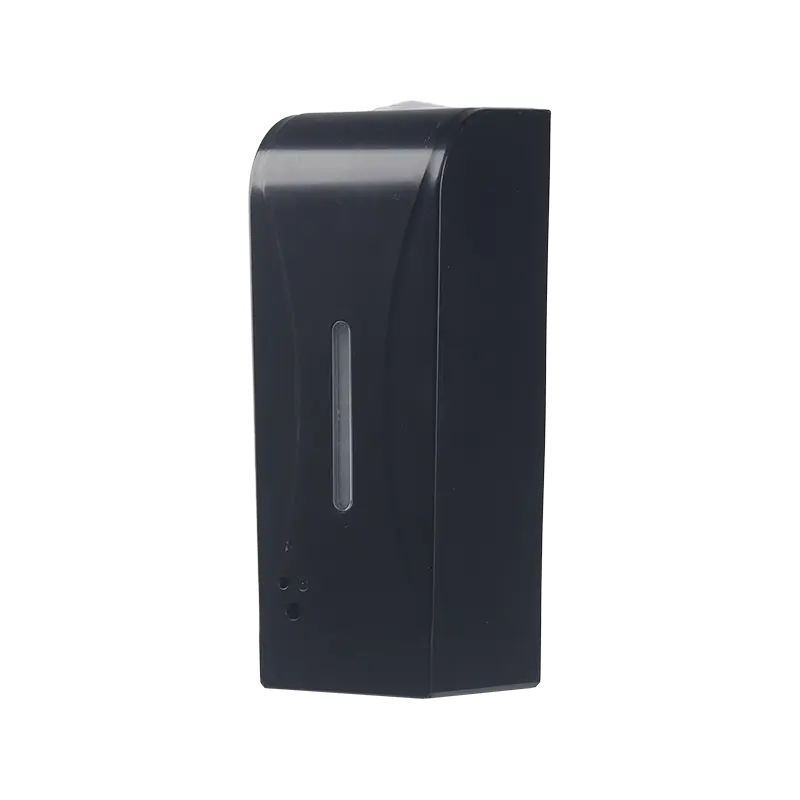
JYS-X1 Infrared Automatic Touchless Spray Hand Sterilizer
1. The Changing Requirements for Hand-Sanitizing Equipment
Hand-sanitizing equipment is no longer evaluated only by whether it can dispense liquid. Modern users also consider how hygienic, efficient, attractive, easy to install, and economical the device is. A commercial dispenser must be able to serve many users while remaining simple to refill and maintain. A home unit should be compact, quiet, convenient, and safe to operate. A healthcare product should support strict hygiene procedures and minimize unnecessary contact.
These expectations have encouraged a shift from conventional manual dispensers to automatic touchless systems. In a manual pump design, the user must apply force to a button or pump head. Even when the liquid itself is disinfecting, the external pump can become a frequently touched surface. The problem becomes more noticeable in shared bathrooms, office entrances, hospital corridors, restaurant reception areas, and school facilities.
A touchless dispenser removes the need for direct hand contact with the device during ordinary operation. This is an important functional advantage because it reduces the number of shared surfaces that users must touch. It also creates a more modern user experience. The user simply moves a hand into the sensing area, receives a fine mist, and continues without touching a button or lever.
However, not every automatic dispenser offers the same performance. Some devices use ordinary pumps that release a large quantity of liquid. Others depend on fixed electrical wiring, which limits placement. Some use thick gel formulas that may not work effectively with fine spray mechanisms. A well-designed system must balance sensor responsiveness, spray consistency, liquid compatibility, power consumption, reservoir size, and installation flexibility.
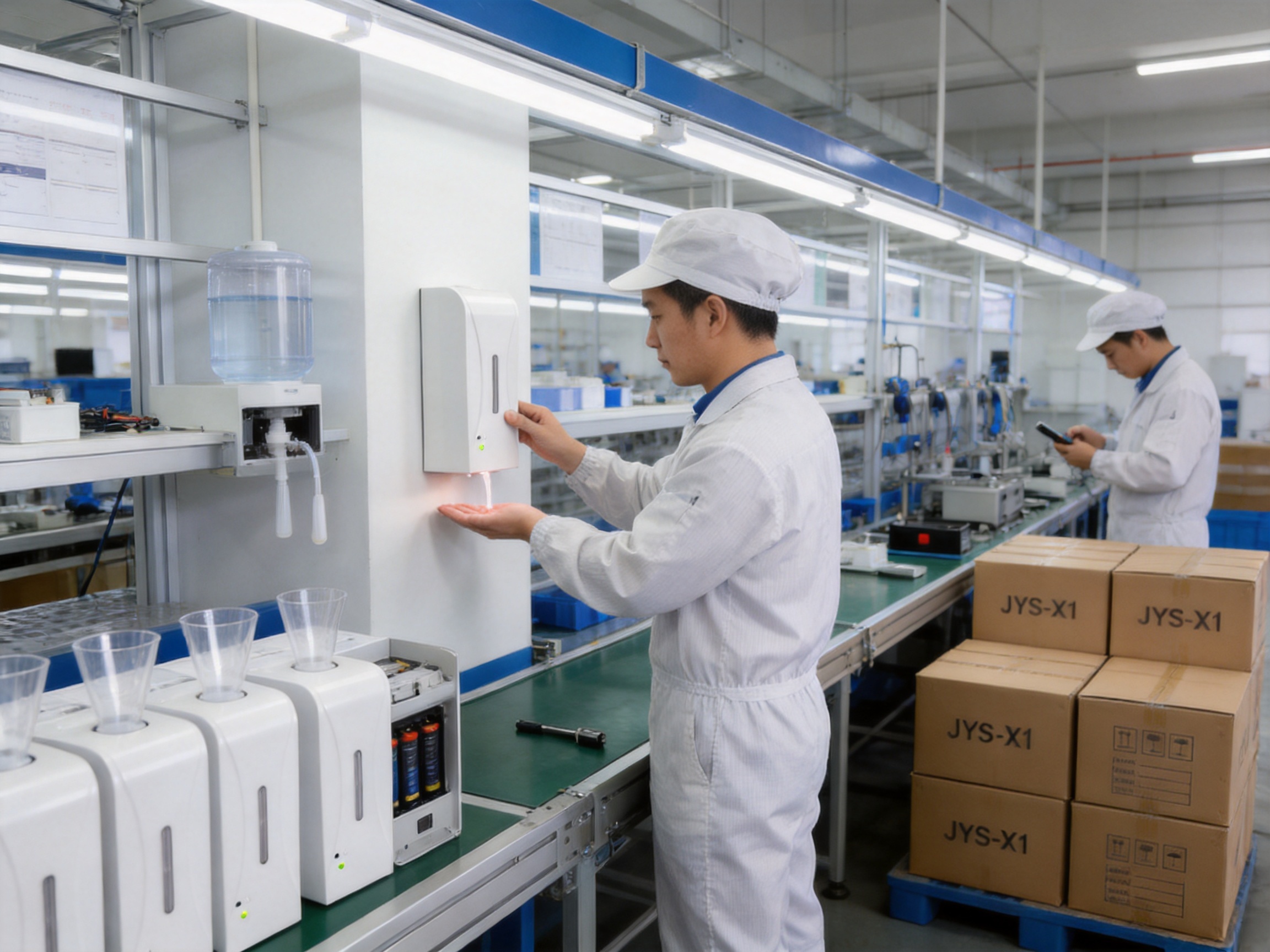
The JYS-X1 is developed around this balance. Its design is focused on controlled touchless operation, suitable liquid compatibility, a space-saving structure, and practical deployment in different environments.
2. Product Overview
The JYS-X1 is an infrared automatic touchless spray hand sterilizer intended for use with 75% alcohol disinfection liquid and other thin, non-viscous sanitizing agents. Its core function is to detect a user’s hand and dispense an ultrasonic fine mist without requiring manual pressing.
The product has a 300ml capacity, allowing it to support regular use while remaining compact enough for wall-mounted installation. The transparent reservoir enables users or facility managers to observe the remaining liquid level, making it easier to plan refills and avoid unexpected interruptions.
Its dimensions are approximately 190 × 78 × 64mm. This slim profile helps the product fit into narrow areas such as bathroom walls, entryways, reception counters, kitchen corners, office entrances, and corridors. The unit operates using four AAA batteries, avoiding the need for a permanent power outlet or exposed power cable.
The principal specifications are summarized below.
| Specification | Product Details |
|---|
| Model | JYS-X1 |
| Product Type | Infrared automatic touchless spray hand sterilizer |
| Reservoir Capacity | 300ml |
| Recommended Liquid | 75% medical alcohol or other suitable thin sanitizing liquids |
| Power Source | Four AAA batteries |
| Sensing Technology | Automatic infrared motion detection |
| Spray Technology | Ultrasonic fine mist |
| Dimensions | 190 × 78 × 64mm |
| Installation | Primarily wall-mounted; stable-surface placement may also be possible |
| Operation | Fully touchless and automatic |
| Recommended Applications | Homes, hotels, hospitals, bathrooms, offices, schools, restaurants, and public spaces |
These specifications position the JYS-X1 between small personal dispensers and larger commercial sanitation stations. It is compact enough for everyday residential use but sufficiently practical for many professional environments.
3. Infrared Touchless Operation
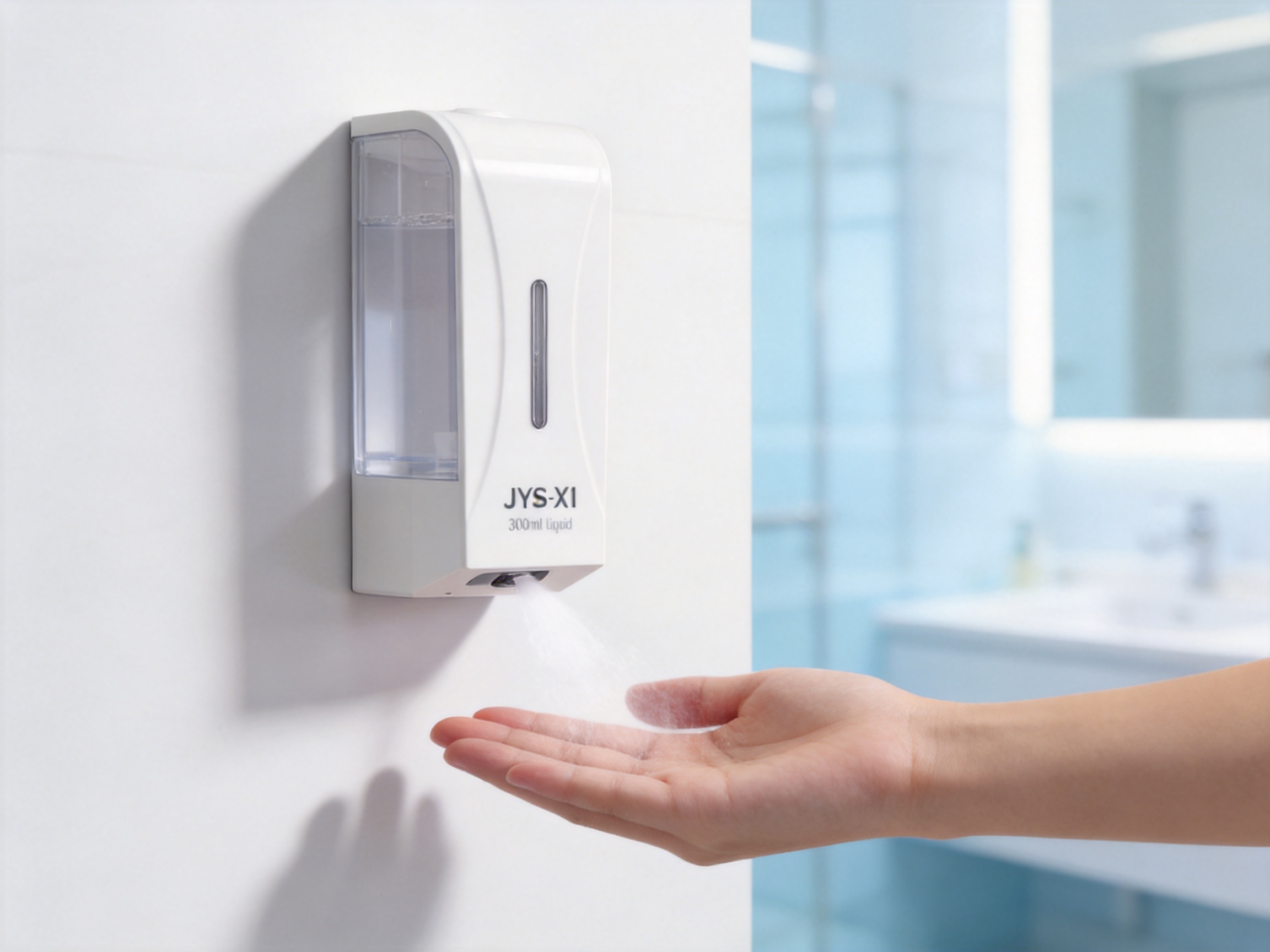
The most recognizable feature of the JYS-X1 is its automatic infrared sensing system. When a user places a hand approximately 5–10cm below the sensor and outlet area, the device detects the movement and activates the spray function. This process eliminates the need to press a mechanical pump or touch a control surface.
Infrared sensing is well suited to hand-sanitizing applications because it can recognize the presence of a nearby hand without requiring physical contact. The user experience is immediate and intuitive. There are no complicated settings to learn, and the dispenser can be used by adults, children, guests, patients, employees, and customers with minimal instruction.
The contactless format offers several practical advantages. First, it helps reduce the number of shared touch surfaces in a hygiene-sensitive environment. Second, it improves convenience for people whose hands may already be dirty or occupied. Third, it supports a cleaner appearance because users do not need to handle a pump head covered with residue or fingerprints.
The sensor-based operating method is also helpful for businesses that want to communicate a visible commitment to hygiene. A touchless dispenser placed at an entrance or reception area signals that the facility has considered user safety and convenience. This can improve the perceived quality of hotels, restaurants, clinics, offices, and retail spaces.
Compared with manual dispensers, the JYS-X1 provides a more advanced experience without requiring complex operation. Compared with some touchless competitors, its battery-powered construction provides greater freedom regarding installation location. The device can be mounted where it is most useful rather than where an electrical outlet happens to be available.
4. Ultrasonic Fine-Mist Spraying
The second major feature is the ultrasonic spray system. Rather than delivering a heavy stream or a large pump dose, the device is designed to produce a fine and uniform mist. This is important because a fine spray can distribute sanitizing liquid across the hands while helping to avoid excessive wetness and unnecessary waste.
Ultrasonic spraying contributes to a more refined user experience. A controlled mist feels lighter than a large liquid release, dries more quickly when an appropriate alcohol-based solution is used, and can cover the surface of the hands without creating as much dripping. This is particularly useful in office entrances, hotel lobbies, healthcare environments, and other areas where users need to sanitize their hands and continue moving.
Fine-mist output can also improve the perceived efficiency of the product. When liquid is released in a controlled pattern, each activation can provide useful coverage without making the user feel that the device is dispensing more fluid than necessary. This can extend the period between refills, reduce operating costs, and limit the amount of liquid lost through over-dispensing.
Spray consistency depends on the liquid used, the condition of the nozzle, the battery level, and correct maintenance. For this reason, the JYS-X1 is optimized for 75% medical alcohol and other thin, non-viscous liquids. Thick gels, foams, heavy soaps, and high-viscosity formulas are not recommended because they may restrict the precision nozzle or interfere with fine-mist performance.
For buyers, this liquid compatibility should be considered during procurement. Selecting the right formulation helps preserve the intended spray quality and reduces the possibility of clogging. Facilities may also benefit from establishing a simple refill procedure that includes checking liquid type, inspecting the reservoir, and cleaning the outlet when necessary.
5. Capacity and Refill Convenience
With a 300ml reservoir, the JYS-X1 offers a practical balance between compact size and usable capacity. A smaller reservoir may require frequent refilling, while a much larger tank can make a wall-mounted unit bulky and visually intrusive. The 300ml format is suitable for areas with regular but moderate traffic and can be replenished without requiring complex maintenance.
The transparent reservoir is another useful feature. Facility managers can quickly see whether the product contains sufficient liquid. This visual monitoring helps prevent the unit from unexpectedly becoming empty during busy periods. In commercial environments, employees can include the dispenser in routine cleaning and replenishment checks.
For households, the capacity is sufficient for repeated daily use without demanding constant attention. For offices, clinics, hotels, restaurants, schools, and public buildings, the refill interval will depend on the number of users and the quantity dispensed per activation. High-traffic sites may choose to inspect the level daily, while lower-traffic locations may require less frequent checks.
The refill process should be completed carefully. The correct sanitizing liquid should be used, the reservoir should not be overfilled, and the external surfaces should be kept dry. When the device is used with alcohol-based products, storage and handling should follow the safety instructions provided for the liquid itself.
6. Battery-Powered Flexibility
The JYS-X1 is powered by four AAA batteries. This eliminates the need for a dedicated wall socket and makes installation possible in locations where wiring would be inconvenient, costly, or visually undesirable.
Battery operation is particularly valuable in older buildings, temporary facilities, event venues, rented premises, and public spaces where electrical modifications are restricted. It also allows a distributor or facility manager to reposition the device when traffic patterns change. A wall-mounted unit can be installed near a doorway, elevator, reception desk, bathroom entrance, staff room, or checkout area without planning a new cable route.
The absence of a power cable creates a cleaner visual appearance. This is beneficial in hotels, offices, clinics, salons, restaurants, and modern homes where exposed cables may detract from the environment. A neat installation can make the sanitation station appear more intentional and professional.
Battery operation also supports portable deployment. An organization can use the product at temporary exhibitions, conferences, school activities, outdoor hospitality areas, construction offices, or emergency response locations, provided that the environment is appropriate and the unit is protected from unsuitable conditions.
Battery life depends on usage frequency, sensor activation, liquid conditions, battery quality, and environmental factors. The supplied product information indicates that, under typical use of more than 100 sprays per day, four AAA batteries may last approximately two to three months. Actual performance can vary, so regular inspection remains advisable. Battery replacement should be included in routine maintenance planning for commercial installations.
7. Compact Wall-Mounted Design
The JYS-X1 measures approximately 190 × 78 × 64mm. Its narrow body occupies limited wall space and helps preserve the visual openness of the installation area. This is an advantage over larger dispensers that may dominate a small bathroom, corridor, or reception desk.
Wall mounting keeps the unit secure, accessible, and away from valuable counter space. In bathrooms and kitchens, counter space is often limited. In clinics and offices, keeping equipment on the wall can reduce clutter and make cleaning easier. In hotel or restaurant environments, a wall-mounted dispenser can be positioned at a consistent height and location for all users.
A wall-mounted design also supports better traffic flow. Users can approach the dispenser, place their hands beneath the outlet, and move away without blocking a countertop or creating a queue around loose equipment. In high-traffic areas, this can improve both convenience and cleanliness.
Although the product is primarily designed for wall mounting, the supplied information indicates that it may also be placed on a stable surface. Countertop use should be evaluated carefully because stability, sensor alignment, and accidental movement can influence performance. Wall mounting remains the recommended option when a permanent and secure installation is required.
8. Competitive Advantages
8.1 Touchless Operation Instead of Manual Pumping
The most direct advantage over conventional dispensers is the elimination of manual pressing. Users do not need to touch a shared pump head, which supports a cleaner and more convenient sanitation process. This feature is especially valuable in public and commercial settings where hundreds of people may use the same dispenser each day.
8.2 Fine Mist Instead of Excessive Liquid Release
The ultrasonic fine-mist system is designed to provide controlled distribution rather than a heavy stream. This may reduce waste, improve user comfort, and help the liquid dry more quickly when the correct formulation is used. The result is a more refined experience than a basic pump dispenser can provide.
8.3 Flexible Installation Without Permanent Wiring
Many automatic devices require an AC adapter or a fixed electrical connection. The battery-powered structure of the JYS-X1 allows installation in more locations and reduces visual cable clutter. This can lower installation complexity and improve the suitability of the product for temporary or frequently changing spaces.
8.4 Practical Capacity in a Compact Body
The combination of 300ml capacity and a 190 × 78 × 64mm body offers a useful compromise. The reservoir is large enough for repeated use, while the overall shape remains slim and unobtrusive. Some compact dispensers sacrifice capacity, while larger commercial units may be harder to install in confined areas.
8.5 Transparent Liquid Monitoring
The visible reservoir allows users to check the remaining liquid at a glance. This simple design decision reduces uncertainty and makes maintenance more predictable. A facility manager does not need to open the unit repeatedly just to determine whether a refill is required.
8.6 Broad Application Potential
The product can serve residential, hospitality, healthcare, office, educational, and public-space applications. This broad market potential is useful for distributors and private-label buyers that need one product suitable for multiple sales channels.
8.7 Low-Complexity User Experience
The operating process is simple: approach the device, place a hand beneath the sensor, receive the mist, and move away. There is no need for a touchscreen, manual setting, or user training. Simple operation improves adoption and reduces the risk of incorrect use.
9. Application Scenarios
9.1 Homes and Residential Buildings
In a home, the JYS-X1 can be installed in an entryway so family members can sanitize their hands after returning from outside. It can also be used near bathrooms, kitchens, utility rooms, or home offices. The touchless design is convenient for children and adults, and the compact format does not occupy valuable floor or counter space.
Residential users may appreciate the ability to install the unit without hiring an electrician. A suitable wall location and four AAA batteries are enough to support normal operation. The transparent tank also makes it easy to see when the product needs attention.
9.2 Hotels and Hospitality Venues
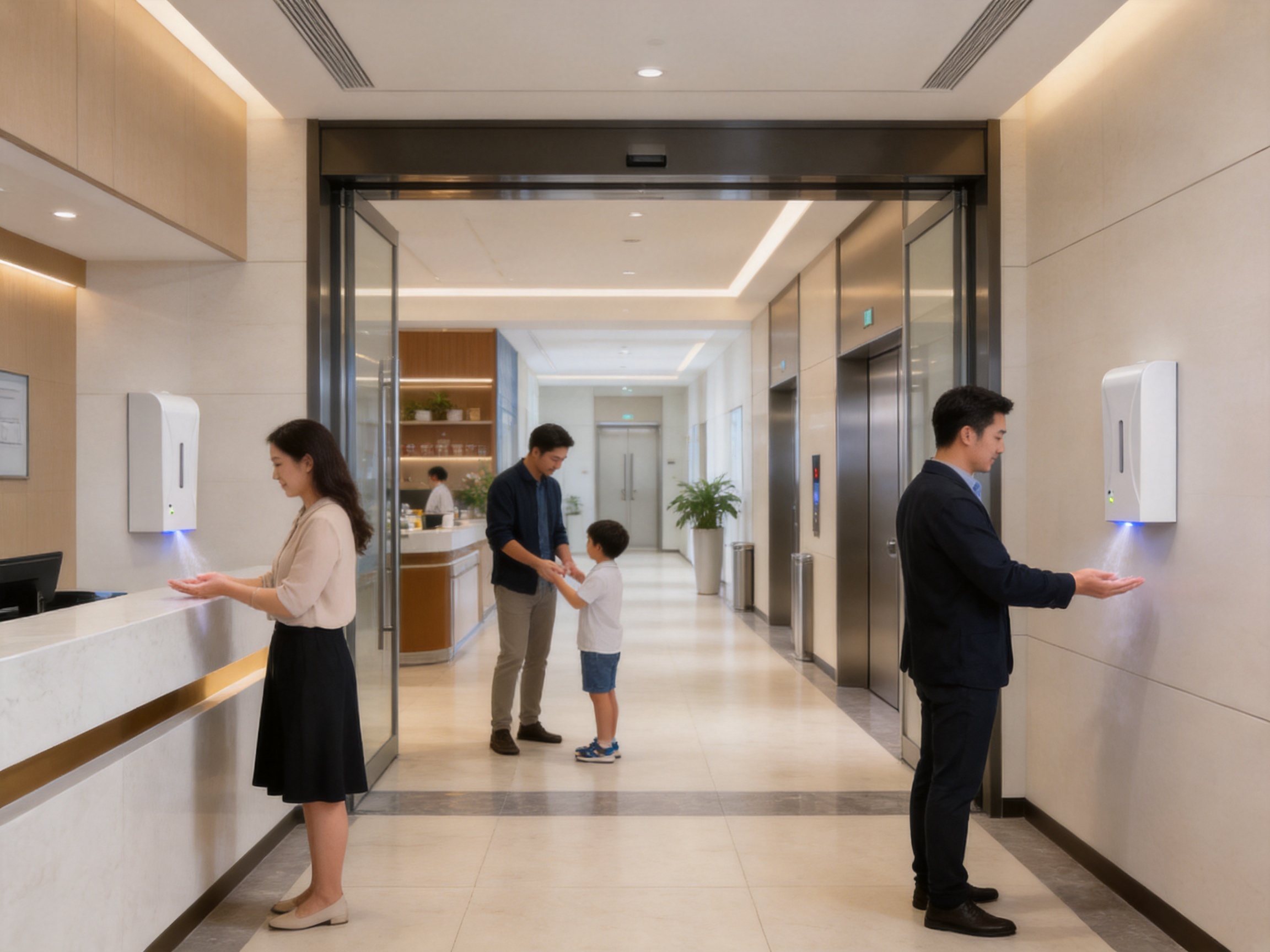
Hotels, restaurants, cafes, and event venues can place touchless sanitizers at entrances, reception desks, buffet areas, elevators, meeting rooms, and restroom approaches. A well-positioned automatic dispenser improves guest convenience while reinforcing a clean and professional brand environment.
The compact wall-mounted design is valuable in hospitality settings because public areas must remain attractive and easy to navigate. The lack of an exposed power cable supports a tidy installation, while the 300ml reservoir provides useful capacity without creating a bulky appearance.
9.3 Hospitals and Clinics
Healthcare facilities require reliable hygiene procedures and clear access to sanitizing products. The JYS-X1 can be used in suitable locations such as clinic entrances, waiting areas, staff rooms, dental offices, examination room approaches, and administrative spaces.
Healthcare buyers should evaluate the product together with their own infection-control policies, approved liquids, placement rules, cleaning schedules, and regulatory requirements. The touchless format can complement broader hygiene protocols by reducing unnecessary contact with shared equipment.
9.4 Offices and Commercial Buildings
Offices can install the product near reception areas, meeting rooms, elevators, shared kitchens, printer areas, and entrances. Automatic dispensing encourages convenient use without interrupting employee movement. In shared workspaces, it provides a visible and accessible hygiene point for staff, visitors, and contractors.
Because the device operates on batteries, office managers can install it without routing wires through finished walls or across walkways. This is particularly helpful in leased offices where permanent modifications may not be permitted.
9.5 Schools and Public Facilities
Schools, libraries, transportation facilities, community centers, and public buildings can use automatic dispensers in high-traffic zones. A touchless system is easy for visitors to understand and can support hand hygiene at important transition points, such as entrances, dining areas, and restroom corridors.
For public applications, installation height, accessibility, refill management, and protection against misuse should be considered carefully. The wall-mounted format can help keep the dispenser in a defined location and reduce the likelihood of being knocked over.
10. Manufacturing Strengths Behind the Product
A successful automatic dispenser is not defined only by its appearance. Its performance depends on product engineering, component selection, assembly accuracy, sensor calibration, liquid-path design, battery management, quality inspection, packaging, and after-sales support. These areas require an experienced manufacturer with a structured production system.
SHAOXING BANGSHUO ELECTRICAL APPLIANCE CO., LTD. is a professional manufacturer of small electrical appliances. The company was founded in 2009 and has experience in developing and producing hair care appliances, smart products for healthy living, and other consumer-oriented electrical products.
The company operates a professional team of more than 140 people and four production lines. Its reported monthly output is approximately 300,000 sets, with annual shipments exceeding three million units. This production scale can support stable supply for distributors, retailers, hospitality groups, and private-label customers.
Manufacturing capacity is especially important for products entering large retail or institutional programs. A buyer may require consistent product availability, repeatable assembly quality, packaging customization, scheduled delivery, and rapid response to market demand. A factory with multiple production lines and established operational processes is better positioned to support these requirements than a small trading operation with limited direct manufacturing control.
The company also provides OEM and ODM services. OEM cooperation allows customers to purchase a product under their own brand, subject to project requirements and agreement. ODM cooperation can involve deeper participation in product appearance, function, packaging, specifications, and market positioning. For the JYS-X1, potential customization discussions may include branding, packaging, color, language on labels, user instructions, accessory configuration, and market-specific requirements.
11. Product Development and Engineering Capability
Small electrical appliances must combine electrical function, mechanical structure, user safety, appearance, and manufacturing efficiency. A dispenser such as the JYS-X1 contains several interdependent systems: the infrared sensor, control circuit, battery compartment, liquid reservoir, spray outlet, housing, wall-mounting structure, and sealing components.
Engineering teams must ensure that these systems work together reliably. The sensor must detect a hand at a practical distance without excessive false activation. The spray mechanism must deliver a suitable mist when the correct liquid is used. The reservoir must be easy to refill while remaining secure during regular operation. The battery compartment must be accessible for replacement but protected during ordinary use.
Product development also requires attention to manufacturability. A design may appear attractive but be expensive or inconsistent to assemble. Experienced manufacturers evaluate part count, assembly steps, tolerance requirements, material selection, inspection points, and packaging protection before mass production. These decisions influence final product quality, production efficiency, and total cost.
Because SHAOXING BANGSHUO ELECTRICAL APPLIANCE CO., LTD. has experience creating new products and providing ODM services, it can support customers that need more than a standard catalog item. A professional development process can help transform a market concept into a manufacturable product with defined specifications and quality targets.
12. Quality, Certification, and Compliance Support
International buyers increasingly require documentation related to electrical safety, environmental requirements, chemical restrictions, energy performance, and social responsibility. According to the supplied company information, the company’s main products have obtained or supported international certifications and compliance marks including TUV GS, CE, CB, ERP, REACH, PAHS, ROHS, and SCCP.
These certifications and compliance frameworks cover different aspects of product acceptance. Depending on the destination market and exact product configuration, buyers may require specific testing, technical files, declarations, labeling, packaging information, and importer documentation. Compliance should always be confirmed for the exact model, electrical configuration, materials, and target country rather than assumed from a general product range.
For distributors, certification support reduces the difficulty of preparing products for market entry. For brand owners, it provides a foundation for their own regulatory review. For institutional buyers, it helps demonstrate that procurement decisions are based on recognized safety and environmental considerations.
The company has also reportedly passed BSCI and BEPI audits. These audits relate to areas such as social responsibility, working conditions, environmental management, and supply-chain expectations. Such assessments are increasingly important for retailers and international brands that evaluate not only product quality but also the standards of their manufacturing partners.
A responsible manufacturing system contributes to long-term cooperation. Buyers are more likely to maintain stable relationships with suppliers that can provide transparent documentation, repeatable production, appropriate testing, and responsive communication.
13. Production Capacity and Supply Reliability
Supply reliability is an important competitive factor in the small-appliance market. A product may have strong consumer appeal, but insufficient production capacity can lead to missed promotions, stock shortages, delayed launches, and inconsistent retail availability.
The reported output of approximately 300,000 sets per month and annual shipments exceeding three million units indicate that the company has experience with substantial order volumes. Four production lines provide additional flexibility for scheduling different models, managing peak demand, and supporting multiple customer programs.
Production scale can also help improve purchasing efficiency. A factory that produces a broad range of small appliances may have established supplier relationships for plastics, electronic components, motors, sensors, packaging materials, and other parts. This experience can support more stable sourcing and more efficient project coordination.
For JYS-X1 buyers, supply planning should include estimated monthly demand, initial order quantities, packaging requirements, inspection standards, shipping schedule, spare parts expectations, and forecast information. Clear communication before mass production helps align factory resources with the customer’s commercial plan.
14. OEM and ODM Opportunities
The JYS-X1 can serve as a practical starting point for buyers seeking a touchless hygiene product under a private label. OEM customers may request their own logo, packaging design, instruction manual, carton artwork, color selection, and market-specific labels. These options can help a distributor build a differentiated product line without developing an entirely new device from the beginning.
ODM projects may go further. A customer could seek a customized housing, modified reservoir, alternative mounting solution, different power arrangement, updated sensor behavior, or a coordinated product family for hotels, clinics, offices, or retailers. The feasibility of each request depends on engineering requirements, certification implications, tooling investment, order volume, and development schedule.
Brand owners should define their target market at the beginning of the project. A product for home use may emphasize appearance, quiet operation, and easy installation. A hotel program may require coordinated colors and packaging. A healthcare buyer may prioritize documentation, cleaning procedures, and institutional delivery. A public-facility project may focus on durability, tamper resistance, refill efficiency, and clear instructions.
An experienced OEM and ODM manufacturer can help evaluate these requirements and identify practical solutions. The best result is not simply a customized appearance but a product that remains manufacturable, compliant, serviceable, and commercially competitive.
15. Maintenance and Operating Guidance
Correct operation helps preserve spray performance and extend product life. Users should fill the reservoir only with liquids compatible with the device. The product is optimized for 75% medical alcohol and other thin, non-viscous sanitizing agents. Thick gels, foams, and heavy soaps should not be used because they may clog the precision outlet or prevent the ultrasonic system from operating correctly.
The sensor area and spray outlet should be kept clean and free from residue. If liquid accumulates around the outlet, it should be removed using an appropriate cleaning method recommended for the product. The reservoir should be inspected regularly, and spills should be cleaned promptly.
Battery condition should also be monitored. A weak battery may reduce operating consistency or affect spray performance. Replacing all four batteries together with a suitable set can help maintain stable operation. Battery replacement should be carried out according to the product instructions, with attention to polarity and safe handling.
The mounting structure should be checked periodically in commercial locations. Screws, brackets, and wall surfaces can be affected by vibration, repeated use, moisture, or accidental impact. A secure installation protects the product and improves user confidence.
Facilities should create a simple maintenance checklist covering liquid level, liquid type, sensor response, spray outlet condition, battery status, housing cleanliness, and mounting security. Regular checks are especially valuable in hospitals, hotels, schools, offices, and other locations where the dispenser is used frequently.
16. Purchasing Considerations for Distributors and Institutions
Before placing an order, buyers should consider the destination market, intended liquid, installation environment, daily usage, packaging requirements, certification needs, and expected order volume. These factors influence both the product configuration and the appropriate purchasing plan.
Distributors should assess whether the product fits their existing sales channels. The JYS-X1 can be positioned as a household hygiene accessory, a commercial facility product, a hotel amenity solution, a healthcare support device, or part of a broader range of smart small appliances.
Institutional buyers should determine how many units are needed, where they will be installed, who will manage refills, and how often the devices will be inspected. A deployment plan can reduce operating problems after installation. It is also useful to identify backup stock of batteries and approved sanitizing liquid.
Brand owners should clarify logo placement, packaging artwork, carton quantities, user manuals, barcode requirements, warranty terms, inspection procedures, and shipping marks in advance. These details can affect production scheduling and should be confirmed before mass production begins.
Buyers should also request current technical documentation and verify the regulatory requirements of the destination country. Certification status can vary according to model, market, electrical configuration, and final product changes. A professional supplier should be able to discuss the available documentation and the process for project-specific compliance.
17. Frequently Asked Questions
Q1: What liquid is recommended for the JYS-X1?
The product is optimized for 75% medical alcohol or other suitable thin, non-viscous sanitizing liquids. Thick gels, foams, and heavy soaps are not recommended because they may clog the fine spray outlet or reduce dispensing performance.
Q2: Does the user need to press a button?
No. The device is designed for fully touchless operation. The user places a hand approximately 5–10cm below the sensor, and the infrared system detects the movement and activates the spray.
Q3: How does the ultrasonic spray benefit users?
The ultrasonic system produces a fine mist rather than a heavy stream. This can support more even hand coverage, reduce excessive liquid release, improve user comfort, and help limit waste when the correct liquid is used.
Q4: How much liquid does the reservoir hold?
The reservoir capacity is 300ml. The transparent structure allows users to monitor the remaining liquid and determine when a refill is needed.
Q5: How is the product powered?
The JYS-X1 uses four AAA batteries. Battery operation allows installation without a permanent electrical outlet and reduces cable clutter. Battery life depends on usage and operating conditions; the supplied information indicates approximately two to three months under typical use of more than 100 sprays per day.
Q6: Where can the unit be installed?
The product is primarily designed for wall-mounted installation. Suitable locations may include homes, hotels, hospitals, bathrooms, offices, kitchens, schools, restaurants, reception areas, and public facilities. It may also be placed on a stable surface, although wall mounting is recommended for security and consistent sensor positioning.
Q7: Is the product suitable for high-traffic commercial areas?
Yes, the product can be used in offices, hotels, clinics, restaurants, schools, and other high-traffic environments. The appropriate number of units and refill frequency should be determined according to the daily number of users.
Q8: What maintenance does the dispenser require?
Routine maintenance includes checking the liquid level, using the correct liquid, cleaning the housing and outlet, monitoring battery condition, and confirming that the wall mount remains secure. A simple inspection schedule is recommended for commercial installations.
Q9: Can buyers request private-label packaging?
The manufacturer provides OEM and ODM services. Buyers may discuss logo application, packaging design, instruction manuals, color options, labeling, and other project requirements. The available customization depends on order volume, engineering feasibility, tooling, compliance, and production planning.
Q10: What makes this product different from a conventional pump dispenser?
The JYS-X1 combines touchless infrared activation, ultrasonic fine-mist spraying, a 300ml tank, battery-powered flexibility, compact wall-mounted construction, and broad application potential. These features provide a more hygienic and modern experience than a manually operated pump dispenser.
Q11: What makes the manufacturer suitable for international buyers?
The company has experience in small electrical appliance manufacturing, product development, OEM and ODM cooperation, large-scale production, international shipments, and certification support. Its reported team, production lines, output, export experience, and audit background can support buyers seeking a long-term manufacturing partner.
Q12: Should the product be used according to local hygiene regulations?
Yes. The JYS-X1 should be used together with the instructions for the sanitizing liquid and the hygiene procedures applicable in the installation country or facility. Buyers should confirm local requirements for product labeling, chemical handling, electrical safety, and institutional use.
18. Overall Assessment
The JYS-X1 Infrared Automatic Touchless Spray Hand Sterilizer is designed for a market that increasingly values convenient, low-contact, and efficient hygiene solutions. Its infrared sensor removes the need for manual pressing, while the ultrasonic fine-mist system provides a more controlled dispensing experience than many traditional pump formats.
The 300ml reservoir supports regular use, and the transparent tank makes monitoring straightforward. Four AAA batteries provide installation flexibility without permanent wiring. The 190 × 78 × 64mm body is compact enough for homes and small commercial areas while remaining practical for hotels, offices, clinics, schools, and public facilities.
Its competitive value comes from the combination of features rather than one isolated function. Touchless activation, fine-mist output, battery operation, compact wall mounting, practical capacity, and broad application potential make the product adaptable to several market segments.
Behind the product is a manufacturer with experience in small electrical appliances, product development, production management, OEM and ODM services, international certification support, and global supply. The reported workforce of more than 140 people, four production lines, monthly output of approximately 300,000 sets, and exports to more than 30 countries and regions indicate the capacity to serve both standard and customized projects.
For distributors, the product offers a commercially understandable proposition: a modern touchless hygiene device with practical installation and wide application potential. For private-label brands, it provides a platform for customized packaging and market positioning. For institutions, it offers a convenient addition to hygiene-management systems.
As with any liquid-dispensing appliance, correct liquid selection, installation, cleaning, battery replacement, and routine inspection are important. When used as intended, the JYS-X1 can help create a more convenient and professional hand-sanitizing point in a wide variety of environments.
References
1. Product specification and operating information for the JYS-X1 Infrared Automatic Touchless Spray Hand Sterilizer, including capacity, sensing method, power source, dimensions, spray technology, and installation recommendations.
2. Manufacturer-provided company information concerning product development, OEM and ODM services, production capacity, export markets, certifications, and factory audits.
3. General principles of hand hygiene and the role of alcohol-based hand-rub products in public, commercial, residential, and healthcare environments.
4. General technical considerations for infrared proximity sensing in automatic dispensing equipment.
5. General engineering considerations for ultrasonic fine-mist liquid dispensing, including liquid viscosity, nozzle maintenance, and controlled output.
6. General procurement considerations for small electrical appliances, including product documentation, market-specific compliance, private labeling, packaging, quality inspection, and supply planning.


 English
 Español